Luster
This is not a word you see and understand.
You have to break it,
The way I cut a golden delicious in half.
You are such a nice plump apple.
Forty years on your hips, and you bloom
Piquant like egg white, inside out,
Full of crotch, full of bosom.
Every time you bury a seed in the clearing of human forest,
A quiver of light in me stands up to prowl behind
And waters it with the wish for a mushroom.
Whenever night snuggles up to the undershrub,
Growth is perfected with lustrous desire.
Oct.28-29, 2007
光泽
你看到并理解的不是一个词。
你必须将它打破,
就像我切开一只金元帅。
你是多么饱满好看的苹果。
四十年的臀股跟随你,而花依然满身
奔放,有如蛋白,由里而外,
荡漾在腹胯,荡漾在胸脯。
你每次走进人的森林,在空地埋葬一粒种子,
我体内就冒出一囊如剑的光束,悄悄尾随你,
以心愿浇灌它,期待它长出一只蘑菇。
当矮灌木上夜色依偎,
生辉的欲望又令成长完美了一回。
2007年10月29日
Tuesday, October 30, 2007

Monday, October 29, 2007
De’erhe: The Seventies
The Seventies
by De’erhe tr. FAN Jinghua
Women’s trousers then
Opened on one side
七十年代
得儿喝
那会儿的女裤
是旁开门
This is a very cute two-line poem from a series of two-line poems by the author, born in 1976, who is often associated with the Lower-Body Poetry and Colloquial Style Poetry and usually publishes his poems in his own blog or associated websites. This poem lends to interpretations to several dimensions, if the socio-cultural background of contemporary China is taken into full consideration. In the late seventies, Mao died (in 1976) and the Cultural Revolution ended; but the state economy system was still in full swing. Mao’s era was a time when the differences between the sexes were consciously removed or suppressed. Women did not wear skirts but trousers. However, men’s trousers with fly-fronts were obviously not catering for the female, therefore the side-opening was adapted into the female style. This both enforces and weakens the visual perception of the sexual identity of the wearer. The alternative interpretation of this then would be about sex or sexuality and their use. Compared with contemporary lower-riders and such, which overtly expose the body, trousers fully cover the women’s body, which went together with the conservatism about sex at that time. However, behind this sexual conservatism was the tension about voyeurism and economical use of sex or sexual appeal. In a time when everyday consumption products were not plenty, there was so called “under-counter” market or exchange. The side-opening of the trousers might lend to this interpretation. Therefore, this two-line poem may be read as a critique of contemporary sexual morality, which might be summarized as a Cash-and-Carry act.
这首小诗的作者通常和所谓的下半身以及口语诗联系在一起,主要发表在个人博客或网络论坛上。这首诗可以指向多个层面的阐释。熟悉中国当代社会文化背景的人自然知道,七十年代末毛去世了,同时文革也结束了,诗人就是出生于这一年。在文革中,性别差异被人为地抹消,女人大都穿上裤子;然而,男裤的门襟显然不合适女性,因此女式裤子便在一侧打开。这实际上既是降低女性的性特征,又是增强了女性的性特征。由此,这样的式样便和性的使用有关。由于国家计划经济的严格,日用消费品比较贫乏。于是,有了一个术语叫做:走后门;也就是以某种关系或者私下的交换获取紧俏的日用品。保守的意识形态当然迫使任何女人都不可能公然以性作为交换条件,因此就是走侧面的(旁门左道)。这与当代的女性裤子式样形成截然对比,例如正面开口的、低腰露脐的裤子等等。因此,这首诗可以说不仅仅是对于七十年代政治、文化的回顾,还是对于当代中国的性道德的一种潜性批判。
by De’erhe tr. FAN Jinghua
Women’s trousers then
Opened on one side
七十年代
得儿喝
那会儿的女裤
是旁开门
This is a very cute two-line poem from a series of two-line poems by the author, born in 1976, who is often associated with the Lower-Body Poetry and Colloquial Style Poetry and usually publishes his poems in his own blog or associated websites. This poem lends to interpretations to several dimensions, if the socio-cultural background of contemporary China is taken into full consideration. In the late seventies, Mao died (in 1976) and the Cultural Revolution ended; but the state economy system was still in full swing. Mao’s era was a time when the differences between the sexes were consciously removed or suppressed. Women did not wear skirts but trousers. However, men’s trousers with fly-fronts were obviously not catering for the female, therefore the side-opening was adapted into the female style. This both enforces and weakens the visual perception of the sexual identity of the wearer. The alternative interpretation of this then would be about sex or sexuality and their use. Compared with contemporary lower-riders and such, which overtly expose the body, trousers fully cover the women’s body, which went together with the conservatism about sex at that time. However, behind this sexual conservatism was the tension about voyeurism and economical use of sex or sexual appeal. In a time when everyday consumption products were not plenty, there was so called “under-counter” market or exchange. The side-opening of the trousers might lend to this interpretation. Therefore, this two-line poem may be read as a critique of contemporary sexual morality, which might be summarized as a Cash-and-Carry act.
这首小诗的作者通常和所谓的下半身以及口语诗联系在一起,主要发表在个人博客或网络论坛上。这首诗可以指向多个层面的阐释。熟悉中国当代社会文化背景的人自然知道,七十年代末毛去世了,同时文革也结束了,诗人就是出生于这一年。在文革中,性别差异被人为地抹消,女人大都穿上裤子;然而,男裤的门襟显然不合适女性,因此女式裤子便在一侧打开。这实际上既是降低女性的性特征,又是增强了女性的性特征。由此,这样的式样便和性的使用有关。由于国家计划经济的严格,日用消费品比较贫乏。于是,有了一个术语叫做:走后门;也就是以某种关系或者私下的交换获取紧俏的日用品。保守的意识形态当然迫使任何女人都不可能公然以性作为交换条件,因此就是走侧面的(旁门左道)。这与当代的女性裤子式样形成截然对比,例如正面开口的、低腰露脐的裤子等等。因此,这首诗可以说不仅仅是对于七十年代政治、文化的回顾,还是对于当代中国的性道德的一种潜性批判。
Sunday, October 28, 2007
JIANG Jie: Listening to Rain
Listening to Rain
To the Tune of “The Beautiful Lady Yu”
by JIANG Jie
When I was a lad, I listened to rain on the pleasure quarters,
Red candles muddled the gauze curtains.
When I matured into my prime, I listened to rain in a faraway boat,
The water was broad, the clouds were low
While wild geese cried in the west wind.
And now I listened to rain under the roof of a monk’s cottage,
Hair on my temples gray like star-stained.
All the emotions of sorrow and joy are inevitably inconsiderate,
I can do nothing about the rain that drips on the doorsteps toward daybreak.
About the author:
JIANG Jie (ca. 1245-1301), style name 竹山zhushan (bamboo hill) was a Song Dynasty poet and a native of Yixing Jiangsu (now famous for the purple clay pottery). Although he passed the imperial examination of during Gong Emperor’s reign (1274-1276), he chose a recluse life. He was hailed as one of The Four Ci-poem Masters in Late Song Dynasty.
蒋捷(竹山)《虞美人》
少年听雨歌楼上,红烛昏罗帐。壮年听雨客舟中,江阔云低,断雁叫西风。
而今听雨僧庐下,鬓已星星也。悲欢离合总无情,一任阶前点滴到天明。
蒋JIANG捷Jie(号style name竹山zhushan—bamboo hill)
《虞美人》To the Tune of “The Beautiful Lady Yu”
少young 年year 听listen 雨rain 歌song 楼storied building 上on
红red 烛candle 昏muddle 罗gauze 帐bed-curtain
壮advancing 年year 听listen 雨rain 客guest 舟boat 中in
江river 阔wide 云cloud 低low
断broken 雁wild goose 叫shout 西west 风wind
而but 今now 听listen 雨rain 僧monk 庐cottage 下down
鬓temple hair/sideburns 已already 星星star 也alas
悲sad 欢happy 离separate 合unite 总always 无without 情emotion
一任let/allow 阶step 前front 点drip 滴drop 到to 天day 明bright
To the Tune of “The Beautiful Lady Yu”
by JIANG Jie
When I was a lad, I listened to rain on the pleasure quarters,
Red candles muddled the gauze curtains.
When I matured into my prime, I listened to rain in a faraway boat,
The water was broad, the clouds were low
While wild geese cried in the west wind.
And now I listened to rain under the roof of a monk’s cottage,
Hair on my temples gray like star-stained.
All the emotions of sorrow and joy are inevitably inconsiderate,
I can do nothing about the rain that drips on the doorsteps toward daybreak.
About the author:
JIANG Jie (ca. 1245-1301), style name 竹山zhushan (bamboo hill) was a Song Dynasty poet and a native of Yixing Jiangsu (now famous for the purple clay pottery). Although he passed the imperial examination of during Gong Emperor’s reign (1274-1276), he chose a recluse life. He was hailed as one of The Four Ci-poem Masters in Late Song Dynasty.
蒋捷(竹山)《虞美人》
少年听雨歌楼上,红烛昏罗帐。壮年听雨客舟中,江阔云低,断雁叫西风。
而今听雨僧庐下,鬓已星星也。悲欢离合总无情,一任阶前点滴到天明。
蒋JIANG捷Jie(号style name竹山zhushan—bamboo hill)
《虞美人》To the Tune of “The Beautiful Lady Yu”
少young 年year 听listen 雨rain 歌song 楼storied building 上on
红red 烛candle 昏muddle 罗gauze 帐bed-curtain
壮advancing 年year 听listen 雨rain 客guest 舟boat 中in
江river 阔wide 云cloud 低low
断broken 雁wild goose 叫shout 西west 风wind
而but 今now 听listen 雨rain 僧monk 庐cottage 下down
鬓temple hair/sideburns 已already 星星star 也alas
悲sad 欢happy 离separate 合unite 总always 无without 情emotion
一任let/allow 阶step 前front 点drip 滴drop 到to 天day 明bright
Friday, October 26, 2007
Hermann Hesse: Without You
Hermann Hesse: Without You
To continue with the last posting about the representation of pain, I am reminded of this poem by Hermann Hesse.
Listening to Elgar, I think of a poem by Hermann Hesse. The poem “Without You” reads like this:
Without You
Hermann Hesse
My pillow gazes upon me at night
Empty as a gravestone;
I never thought it would be so bitter
To be alone,
Not to lie down asleep in your hair.
I lie alone in a silent house,
The hanging lamp darkened,
And gently stretch out my hands
To gather in yours,
And softly press my warm mouth
Toward you, and kiss myself, exhausted and weak-
Then suddenly I'm awake
And all around me the cold night grows still.
The star in the window shines clearly-
Where is your blond hair,
Where your sweet mouth?
Now I drink pain in every delight
And poison in every wine;
I never knew it would be so bitter
To be alone,
Alone, without you.
The crucial variation of the poem lies between “I never thought” in the first stanza and “I never knew” in the last stanza. In the beginning, the poet said that he knew of the bitterness, but he did not think of the “degree.” During the process, he learned or experienced the bitterness, and finally acknowledged the devastating degree of the bitterness; therefore, he said “I never knew.”
"Now I drink pain in every delihgt" is exactly what I was driving at when I talked about the re-investment of all the tiny moments of pleasure in the in-between years (between the experience and the representation).
没有你
赫尔曼-黑塞
夜晚 我的枕头盯着我
墓碑一样空洞
我从未想到过独自一人
未能躺在你的长发间睡去
竟会如此之苦
我孤身躺在一栋沉寂的房子里
吊灯黑了
我轻缓地伸出双手
想牵到你的手
我将温热的嘴轻柔地
压向你,可我吻的是自我,力竭到疲软——
然后突然醒来
周身的一切唯有寒夜的宁静在生长
窗框里的星明亮得清晰——
哪儿是你的金发
哪儿是你的蜜唇
如今我在每一刻欢愉中啜饮痛苦
每一滴醇酒中啜饮毒药
我从未体识过独自一人
独自一人没有你
竟会如此之苦
这首诗中的最关键变奏就在于第一节中的“我从未想到过”变成了最后一节中的“我从未体识过”。开始的时候,诗人似乎说自己多少还是知道那是很痛苦的,然而却不知道其程度如何;而经过了这首诗中的经历和体验,到了最后他才真正knew知道了那痛苦的程度。“我在每一刻欢愉中啜饮痛苦"便是我前面所说的,对于痛苦的再现,实际上是将痛苦经历之后的每一点欢愉都重新投入了。因此,经过这样的投入,人便了无生趣。
To continue with the last posting about the representation of pain, I am reminded of this poem by Hermann Hesse.
Listening to Elgar, I think of a poem by Hermann Hesse. The poem “Without You” reads like this:
Without You
Hermann Hesse
My pillow gazes upon me at night
Empty as a gravestone;
I never thought it would be so bitter
To be alone,
Not to lie down asleep in your hair.
I lie alone in a silent house,
The hanging lamp darkened,
And gently stretch out my hands
To gather in yours,
And softly press my warm mouth
Toward you, and kiss myself, exhausted and weak-
Then suddenly I'm awake
And all around me the cold night grows still.
The star in the window shines clearly-
Where is your blond hair,
Where your sweet mouth?
Now I drink pain in every delight
And poison in every wine;
I never knew it would be so bitter
To be alone,
Alone, without you.
The crucial variation of the poem lies between “I never thought” in the first stanza and “I never knew” in the last stanza. In the beginning, the poet said that he knew of the bitterness, but he did not think of the “degree.” During the process, he learned or experienced the bitterness, and finally acknowledged the devastating degree of the bitterness; therefore, he said “I never knew.”
"Now I drink pain in every delihgt" is exactly what I was driving at when I talked about the re-investment of all the tiny moments of pleasure in the in-between years (between the experience and the representation).
没有你
赫尔曼-黑塞
夜晚 我的枕头盯着我
墓碑一样空洞
我从未想到过独自一人
未能躺在你的长发间睡去
竟会如此之苦
我孤身躺在一栋沉寂的房子里
吊灯黑了
我轻缓地伸出双手
想牵到你的手
我将温热的嘴轻柔地
压向你,可我吻的是自我,力竭到疲软——
然后突然醒来
周身的一切唯有寒夜的宁静在生长
窗框里的星明亮得清晰——
哪儿是你的金发
哪儿是你的蜜唇
如今我在每一刻欢愉中啜饮痛苦
每一滴醇酒中啜饮毒药
我从未体识过独自一人
独自一人没有你
竟会如此之苦
这首诗中的最关键变奏就在于第一节中的“我从未想到过”变成了最后一节中的“我从未体识过”。开始的时候,诗人似乎说自己多少还是知道那是很痛苦的,然而却不知道其程度如何;而经过了这首诗中的经历和体验,到了最后他才真正knew知道了那痛苦的程度。“我在每一刻欢愉中啜饮痛苦"便是我前面所说的,对于痛苦的再现,实际上是将痛苦经历之后的每一点欢愉都重新投入了。因此,经过这样的投入,人便了无生趣。
Performing Elgar’s Cello Concerto
Performing Elgar’s Cello Concerto
When listening to Elgar’s Cello Concerto, one cannot help remembering the most gifted cellist Jacqueline du Pré. The film based on her sister’s memoir is dubbed with a Chinese title which literally means She Is Lonelier Than the Flowers of Smoke. I could not decide to marvel at this translation or reprove it as kitsch. Elgar’s Cello Concerto reminds me of T. S. Eliot’s poems, especially, perhaps, The Waste Land, though I have to admit the idiosyncratic association may appear to be a little farfetched.
The CD I am listening to is performed by Yo-yo Ma. Ma’s interpretation sounds a little “hovering.” By hovering I mean that he has a kind of pre-knowledge of the “meaning” in the music, and he knows that he could live through the suffering and misery. That is, the player of the musical text has an assured mastery of the meaning behind it, and he is overtly self-assured and confident. Therefore, the skill is given a self-awared attention, and the player is half a step before the emotions in the music.
For the representation or interpretation of pain, it is a hard issue. For the composer or author, to represent is to re-live, sometimes even more difficult than the actual experience, because when he was in the grip of pain the will to survive might be his driving force to live on. When representing it, he has to turn back and re-submerge into it and re-invest all the tiny moments of pleasure in the world in in-between years. This is deadly consuming. That is why many writers commit suicide after they survived trauma and usually they took their own lives immediately after writing about it.
Of course, Yo-yo Ma is not experiencing the pain. He is interpreting.
演奏
听Elgar埃尔加的大提琴协奏曲,突然一个没有想到的朋友登陆MSN,幸喜之下,记之。听这个协奏曲无法不想到Jacqueline du Pré杜普莱。那部电影的名字被中文翻译成《她比烟花寂寞》(不知道该惊艳还是责骂kitsch媚俗)。埃尔加的这个大提琴曲听来很重,从我这个读诗人的角度来听,难免会想到T.S.艾略特。大提琴是不是很男人的乐器,我无法说。记得最早着迷大提琴是在大学三年级,那时候写过一个短诗剧,只有两个演员的角色,也找好了一个学妹排演了;当然,最终没有上演。我在其中用的第一个主要道具就是大提琴,当时写那个诗剧脑子里很有一股浮士德在书斋的味道。一个教文学的老师也是一个诗人,拿去看了,说了一些很鼓励的话;呵呵,现在想起来,也许就是一些礼貌性的话。做诗人的,而且还是老师,大概总应该对学生有点屈尊鼓励才是应该的。
我听的这个版本的演奏者是马友友,多少有点温暖了一些,或者有点抽离了吧。我觉得埃尔加应该比这个演奏更为沉重一点。马友友的演奏中带一点洋洋之气,也就是有点“这一切我能对付”的那种自觉,不是沉入、经过,而是心中有数:这一切苦痛虽然严重,然而我觉得似乎可以经受。这种自信最终使得演奏的感情或者演奏感比音乐所要传达的感情先走了一步这种自信最终使得演奏的感情或者演奏感比音乐所要传达的感情先走了一步,有一点飘(就像大部分很有技术/艺术自觉的诗歌阐释者阐释诗歌一样,当然并不能说是不好,而是说这样的阐释往往在给普通读者以技术指引的同时,使得读者不敢仅仅沉醉于那首诗的强烈感情)。
而我觉得对于痛苦不应该是这样的,否则就不会真正懂得什么叫痛苦了。痛苦的再现和阐释,这是一个很难的论题。对于一个作者而言,再现就是重新经历,有时可能比实际经历的时候更加难以忍受。这是因为当他被痛苦钳制的时候,生存意志可以成为他活下去的驱动力,也就是对将来还能抱有希望。在再现的时候,他必须回过头来,重新沉浸到痛苦中,并且将日后的每一点小小的快乐时刻都重新投出其中。这种耗损是致命的。这也就是为什么很多作家在幸存多年,却在写出了痛苦之后,很快就自杀了。
记得前几天读黑塞Herman Hesse的诗,有一首叫做Without You《没有你》,表面上似乎是情诗,但是这个“你”更是死亡。该诗的第一节和最后一节几乎是重复的(有点像艺术歌曲):
I never thought it would be so bitter
To be alone,
Not to lie down asleep in you hair.
我从未想到过独自一人
未能躺在你的长发间睡去
竟会如此之苦
从这里的“我从未想到过”过渡到最后,成为:
I never knew it would be so bitter
To be alone
Alone, without you.
我从未体识过独自一人
独自一人没有你
竟会如此之苦
从想到到体识,这才是关键。这是说,不是我不知道或者没想到过其苦,而是说,没想到如此之苦。而这么苦的时候,就是在经历的时候说才行。否则就好像走在一个淤泥沟边上,深深体会着那个跋涉在淤泥中的人,感到自己似乎也陷入其中;然而,真正的识知,不是与那个人共鸣,而是自己一边走在淤泥沟中,一边说:没想到竟是这么艰难。这里的区别也就在于人们所说的:那个人领会吃透了那音乐,那个人就是音乐。
马友友的演奏是很高超的,高而且超。然而,有时候人们应该听的不是演奏中的技术性高超和阐释,而是融入生命激情,也就是纯粹的私人版本。写诗读诗或许也应该是这样吧。
When listening to Elgar’s Cello Concerto, one cannot help remembering the most gifted cellist Jacqueline du Pré. The film based on her sister’s memoir is dubbed with a Chinese title which literally means She Is Lonelier Than the Flowers of Smoke. I could not decide to marvel at this translation or reprove it as kitsch. Elgar’s Cello Concerto reminds me of T. S. Eliot’s poems, especially, perhaps, The Waste Land, though I have to admit the idiosyncratic association may appear to be a little farfetched.
The CD I am listening to is performed by Yo-yo Ma. Ma’s interpretation sounds a little “hovering.” By hovering I mean that he has a kind of pre-knowledge of the “meaning” in the music, and he knows that he could live through the suffering and misery. That is, the player of the musical text has an assured mastery of the meaning behind it, and he is overtly self-assured and confident. Therefore, the skill is given a self-awared attention, and the player is half a step before the emotions in the music.
For the representation or interpretation of pain, it is a hard issue. For the composer or author, to represent is to re-live, sometimes even more difficult than the actual experience, because when he was in the grip of pain the will to survive might be his driving force to live on. When representing it, he has to turn back and re-submerge into it and re-invest all the tiny moments of pleasure in the world in in-between years. This is deadly consuming. That is why many writers commit suicide after they survived trauma and usually they took their own lives immediately after writing about it.
Of course, Yo-yo Ma is not experiencing the pain. He is interpreting.
演奏
听Elgar埃尔加的大提琴协奏曲,突然一个没有想到的朋友登陆MSN,幸喜之下,记之。听这个协奏曲无法不想到Jacqueline du Pré杜普莱。那部电影的名字被中文翻译成《她比烟花寂寞》(不知道该惊艳还是责骂kitsch媚俗)。埃尔加的这个大提琴曲听来很重,从我这个读诗人的角度来听,难免会想到T.S.艾略特。大提琴是不是很男人的乐器,我无法说。记得最早着迷大提琴是在大学三年级,那时候写过一个短诗剧,只有两个演员的角色,也找好了一个学妹排演了;当然,最终没有上演。我在其中用的第一个主要道具就是大提琴,当时写那个诗剧脑子里很有一股浮士德在书斋的味道。一个教文学的老师也是一个诗人,拿去看了,说了一些很鼓励的话;呵呵,现在想起来,也许就是一些礼貌性的话。做诗人的,而且还是老师,大概总应该对学生有点屈尊鼓励才是应该的。
我听的这个版本的演奏者是马友友,多少有点温暖了一些,或者有点抽离了吧。我觉得埃尔加应该比这个演奏更为沉重一点。马友友的演奏中带一点洋洋之气,也就是有点“这一切我能对付”的那种自觉,不是沉入、经过,而是心中有数:这一切苦痛虽然严重,然而我觉得似乎可以经受。这种自信最终使得演奏的感情或者演奏感比音乐所要传达的感情先走了一步这种自信最终使得演奏的感情或者演奏感比音乐所要传达的感情先走了一步,有一点飘(就像大部分很有技术/艺术自觉的诗歌阐释者阐释诗歌一样,当然并不能说是不好,而是说这样的阐释往往在给普通读者以技术指引的同时,使得读者不敢仅仅沉醉于那首诗的强烈感情)。
而我觉得对于痛苦不应该是这样的,否则就不会真正懂得什么叫痛苦了。痛苦的再现和阐释,这是一个很难的论题。对于一个作者而言,再现就是重新经历,有时可能比实际经历的时候更加难以忍受。这是因为当他被痛苦钳制的时候,生存意志可以成为他活下去的驱动力,也就是对将来还能抱有希望。在再现的时候,他必须回过头来,重新沉浸到痛苦中,并且将日后的每一点小小的快乐时刻都重新投出其中。这种耗损是致命的。这也就是为什么很多作家在幸存多年,却在写出了痛苦之后,很快就自杀了。
记得前几天读黑塞Herman Hesse的诗,有一首叫做Without You《没有你》,表面上似乎是情诗,但是这个“你”更是死亡。该诗的第一节和最后一节几乎是重复的(有点像艺术歌曲):
I never thought it would be so bitter
To be alone,
Not to lie down asleep in you hair.
我从未想到过独自一人
未能躺在你的长发间睡去
竟会如此之苦
从这里的“我从未想到过”过渡到最后,成为:
I never knew it would be so bitter
To be alone
Alone, without you.
我从未体识过独自一人
独自一人没有你
竟会如此之苦
从想到到体识,这才是关键。这是说,不是我不知道或者没想到过其苦,而是说,没想到如此之苦。而这么苦的时候,就是在经历的时候说才行。否则就好像走在一个淤泥沟边上,深深体会着那个跋涉在淤泥中的人,感到自己似乎也陷入其中;然而,真正的识知,不是与那个人共鸣,而是自己一边走在淤泥沟中,一边说:没想到竟是这么艰难。这里的区别也就在于人们所说的:那个人领会吃透了那音乐,那个人就是音乐。
马友友的演奏是很高超的,高而且超。然而,有时候人们应该听的不是演奏中的技术性高超和阐释,而是融入生命激情,也就是纯粹的私人版本。写诗读诗或许也应该是这样吧。
Wednesday, October 24, 2007
Fan Jinghua: A Haunted Pastoral
A Haunted Pastoral
A katydid is chirping, and intriguing us into a hide-and-seek game
Its offstage show stops at approaching steps and it’s seen only as a flight
I once had a peep of its vigilant look when it was absorbed in singing
The greenish soft belly fluctuated, so sexily
But a hedge of tiger lilies in bloom before me
Encircles a black iron statue, contours hairy, looming solid
Then a plastic bag, wet and black, suddenly falls from its head
Like a huge bird, its knuckles cracking like a boneless thunder
Oct. 13, 2007
鬼魅的牧歌
纺织娘在清鸣 将我们诱入一场迷藏戏
我们走近 她便停止叫场 我们发现的她总是一条逃逸的线
我曾偷窥过一眼 她沉醉歌唱时的警觉姿态
那柔软的绿肚子一起一伏 性感得令人难以自控地想要触摸
而虎纹百合在我面前盛开成一排树篱
围着一尊雕像 在雾中 其毛茸茸的轮廓逐渐显示出黑铁的坚实
然后 一只黑色塑料袋 兜着水 突然从它的头上滑落
像一只鸟 关节发出脆响 从天上栽倒 无骨的雷声
2007年10月23日
A katydid is chirping, and intriguing us into a hide-and-seek game
Its offstage show stops at approaching steps and it’s seen only as a flight
I once had a peep of its vigilant look when it was absorbed in singing
The greenish soft belly fluctuated, so sexily
But a hedge of tiger lilies in bloom before me
Encircles a black iron statue, contours hairy, looming solid
Then a plastic bag, wet and black, suddenly falls from its head
Like a huge bird, its knuckles cracking like a boneless thunder
Oct. 13, 2007
鬼魅的牧歌
纺织娘在清鸣 将我们诱入一场迷藏戏
我们走近 她便停止叫场 我们发现的她总是一条逃逸的线
我曾偷窥过一眼 她沉醉歌唱时的警觉姿态
那柔软的绿肚子一起一伏 性感得令人难以自控地想要触摸
而虎纹百合在我面前盛开成一排树篱
围着一尊雕像 在雾中 其毛茸茸的轮廓逐渐显示出黑铁的坚实
然后 一只黑色塑料袋 兜着水 突然从它的头上滑落
像一只鸟 关节发出脆响 从天上栽倒 无骨的雷声
2007年10月23日
Fan Jinghua: Fact
Fact
The fact is at another time
You may philosophize over all this, say, height
Practically one more staircase does not change the view
On different floors people are born and then live
The moon floats past, its motion uniform
The stars look the same
Yet you are now before the window
Alone with a book of ancient lyrics
And the fact is changed
Oct. 22, 2007
事实
事实是 在另一个时间
你可能会很哲理地谈论一切 譬如高度
登一层楼 风景并不会有什么不同
人们出生接着便活着 在不同的楼层
月亮以均匀的速度漂过
星星看起来总是不动
而此刻你坐在窗前
以一本古典诗词为伴
事实就变了
2007年10月23日
The fact is at another time
You may philosophize over all this, say, height
Practically one more staircase does not change the view
On different floors people are born and then live
The moon floats past, its motion uniform
The stars look the same
Yet you are now before the window
Alone with a book of ancient lyrics
And the fact is changed
Oct. 22, 2007
事实
事实是 在另一个时间
你可能会很哲理地谈论一切 譬如高度
登一层楼 风景并不会有什么不同
人们出生接着便活着 在不同的楼层
月亮以均匀的速度漂过
星星看起来总是不动
而此刻你坐在窗前
以一本古典诗词为伴
事实就变了
2007年10月23日
Monday, October 22, 2007
Fan Jinghua: Light and Color of Home
Light and Color of Home
All the balloons of luxury are punctured
The leaves hurry on down from their temporary habitats on the height
Like confetti showering the vertical shoulder of bachelorhood
In the yard, moonlight is clean and cricket chirping sounds like razors
When clouds drag away, noisiness of half the sky is emptied
Tonight’s door drops its latches on the ground behind
Home invites like a cave, unfathomable, and a bed lies firmly in the deep
If you have already bared your body by now, there should be a pile of light
Hovering mutely and denying my naked eyes, the solid white I’ll hold into my body
Oct. 19-20, 2007
光与色
与奢华相关的所有气球都被戳破了
叶子匆匆结束着高处的借居
像婚礼的彩纸屑纷洒在垂直的单身肩膀上
院子里 月光明净 蛩声清厉
云朵拖曳而去时 半空的热闹被腾空了
今夜的门 将门闩泄落在背后的暗地
家 洞开着深不可测的热情 一张床稳稳地躺在深处
如果此刻你已脱光 应该有一堆肉眼难以看见的光
幽幽地浮着 那可以被抱进身体的实在的白
2007年10月22日
All the balloons of luxury are punctured
The leaves hurry on down from their temporary habitats on the height
Like confetti showering the vertical shoulder of bachelorhood
In the yard, moonlight is clean and cricket chirping sounds like razors
When clouds drag away, noisiness of half the sky is emptied
Tonight’s door drops its latches on the ground behind
Home invites like a cave, unfathomable, and a bed lies firmly in the deep
If you have already bared your body by now, there should be a pile of light
Hovering mutely and denying my naked eyes, the solid white I’ll hold into my body
Oct. 19-20, 2007
光与色
与奢华相关的所有气球都被戳破了
叶子匆匆结束着高处的借居
像婚礼的彩纸屑纷洒在垂直的单身肩膀上
院子里 月光明净 蛩声清厉
云朵拖曳而去时 半空的热闹被腾空了
今夜的门 将门闩泄落在背后的暗地
家 洞开着深不可测的热情 一张床稳稳地躺在深处
如果此刻你已脱光 应该有一堆肉眼难以看见的光
幽幽地浮着 那可以被抱进身体的实在的白
2007年10月22日
CEN Shen: Mountain House in Spring
CEN Shen: Mountain House in Spring (No.2 of the Two)
Over Liang Garden, the sun is setting, crows flying chaotic;
From the desolate sight one can only spot three or two houses.
The courtyard trees do not learn that no people will come back,
As the spring falls they are still sprouting the same old flowers.
岑参《山房春事二首其二》
梁园日暮乱飞鸦,极目萧条三两家。庭树不知人去尽,春来还发旧时花。
《山Mountian 房house 春spring 事matter》
梁Liang 园Garden 日sun 暮dusk 乱chaotic 飞fly 鸦crow
极extreme 目sight 萧条desolate 三three 两two 家home
庭courtyard 树tree 不no 知know 人people 去go 尽empty
春spring 来come 还again 发sprout 旧old 时time 花flower
About the Poet:
CEN Shen (Ca. 715-770) was a high Tang poet, famous for his 边塞诗 frontier quatrain, paired with GAO Shi (716-765) as the Two Frontier Poets.
Note:
Liang Garden, also called Bamboo Garden, was an imperial garden built by Prince Xiao 梁孝王from West Han (the Former Han) 西汉Dynasty (202BC-8 AD) in the princedom of Liang (modern Henan Province). The Prince had been the patron of many eminent poets of the time and feasted them in the garden.
 A Painting Based on CEN Shen's Poem from Complete Painting Manual [自习花谱大全]
Compare:
GAO Shi’s The Ruined Terrace (tr. Stephen Owen)
When long ago Liang’s prince was in his glory,
Among his guests were many men of talent.
And now remote, across a thousand years,
There are only the ruins of his high terrace.
In utter silence I face the autumn grasses,
And a sad wind comes from a thousand miles.
高适:宋中十首(其一)
GAO Shi: Ten Poems Written in Songzhong (No.1)
梁Liang 王Prince 昔once 全full 盛flourish
宾guest 客visitor 复repeatedly 多much 才talent
悠long 悠long 一one 千thousand 年years
陈old 迹traces 唯only 高high 台terrace
寂silent 寞lonely 向toward 秋autumn 草grass
悲sad 风wind 千thousand 里mile 来come
高适:宋中十首(其一)
梁王昔全盛,宾客复多才。悠悠一千年,陈迹唯高台。寂寞向秋草,悲风千里来。
Over Liang Garden, the sun is setting, crows flying chaotic;
From the desolate sight one can only spot three or two houses.
The courtyard trees do not learn that no people will come back,
As the spring falls they are still sprouting the same old flowers.
岑参《山房春事二首其二》
梁园日暮乱飞鸦,极目萧条三两家。庭树不知人去尽,春来还发旧时花。
《山Mountian 房house 春spring 事matter》
梁Liang 园Garden 日sun 暮dusk 乱chaotic 飞fly 鸦crow
极extreme 目sight 萧条desolate 三three 两two 家home
庭courtyard 树tree 不no 知know 人people 去go 尽empty
春spring 来come 还again 发sprout 旧old 时time 花flower
About the Poet:
CEN Shen (Ca. 715-770) was a high Tang poet, famous for his 边塞诗 frontier quatrain, paired with GAO Shi (716-765) as the Two Frontier Poets.
Note:
Liang Garden, also called Bamboo Garden, was an imperial garden built by Prince Xiao 梁孝王from West Han (the Former Han) 西汉Dynasty (202BC-8 AD) in the princedom of Liang (modern Henan Province). The Prince had been the patron of many eminent poets of the time and feasted them in the garden.
A Painting Based on CEN Shen's Poem from Complete Painting Manual [自习花谱大全]Compare:
GAO Shi’s The Ruined Terrace (tr. Stephen Owen)
When long ago Liang’s prince was in his glory,
Among his guests were many men of talent.
And now remote, across a thousand years,
There are only the ruins of his high terrace.
In utter silence I face the autumn grasses,
And a sad wind comes from a thousand miles.
高适:宋中十首(其一)
GAO Shi: Ten Poems Written in Songzhong (No.1)
梁Liang 王Prince 昔once 全full 盛flourish
宾guest 客visitor 复repeatedly 多much 才talent
悠long 悠long 一one 千thousand 年years
陈old 迹traces 唯only 高high 台terrace
寂silent 寞lonely 向toward 秋autumn 草grass
悲sad 风wind 千thousand 里mile 来come
高适:宋中十首(其一)
梁王昔全盛,宾客复多才。悠悠一千年,陈迹唯高台。寂寞向秋草,悲风千里来。
Fan Jinghua: Dissolution
Dissolution
You loosen up I withdraw
Along the bedside, you lie on your back
I am face-down, along the bed-end
Two crosses of exhausted flesh
Nailed together at my hips with your heels
Two of our fingertips almost touch
My hearing is muffled by the bedspread
And the strokes of your hand send into my head
The echoing thunders of the box-spring from underneath
You are haloed stars and I am a split moon
Toward the hinterland of the bed, it is a vegetable desert
Oct. 21, 2007
交欢之后
你松弛 我退缩
顺着床沿 你正面向上
我横在床尾 俯卧
两个耗竭的肉体十字
在我的股下以你的脚跟钉在一起
我们有一只手指尖几乎相触
我单耳贴着床垫
你的手摩挲着被单
将深处的滚雷弹进我的脑腔
你是带晕的星星 我是裂开的月亮
通往这张床的内地 是一片沙漠在生长
2007年10月22日
You loosen up I withdraw
Along the bedside, you lie on your back
I am face-down, along the bed-end
Two crosses of exhausted flesh
Nailed together at my hips with your heels
Two of our fingertips almost touch
My hearing is muffled by the bedspread
And the strokes of your hand send into my head
The echoing thunders of the box-spring from underneath
You are haloed stars and I am a split moon
Toward the hinterland of the bed, it is a vegetable desert
Oct. 21, 2007
交欢之后
你松弛 我退缩
顺着床沿 你正面向上
我横在床尾 俯卧
两个耗竭的肉体十字
在我的股下以你的脚跟钉在一起
我们有一只手指尖几乎相触
我单耳贴着床垫
你的手摩挲着被单
将深处的滚雷弹进我的脑腔
你是带晕的星星 我是裂开的月亮
通往这张床的内地 是一片沙漠在生长
2007年10月22日
Sunday, October 21, 2007
Fan Jinghua: This is Poetry
This is Poetry
On the last day of our walking together,
I hold on the tip of my tongue the initial promise of your silence;
Henceforth, even though I walk the earth naked,
Nothing is alone, like the sky,
Emptily azure or suggestively cloudy,
Exhibits a boundless mindscape of its own, with or without birds.
Oct. 21, 2007
诗
在我们同行的最后一日
我的舌尖粘着你最初那沉默的许诺
从此 赤条条行于大地的一切 都不再孤独
如天空 湛蓝或阴霾 一片清澄或云外有天
都包含着无限的风景 与鸟没有关系
2007年10月21日
On the last day of our walking together,
I hold on the tip of my tongue the initial promise of your silence;
Henceforth, even though I walk the earth naked,
Nothing is alone, like the sky,
Emptily azure or suggestively cloudy,
Exhibits a boundless mindscape of its own, with or without birds.
Oct. 21, 2007
诗
在我们同行的最后一日
我的舌尖粘着你最初那沉默的许诺
从此 赤条条行于大地的一切 都不再孤独
如天空 湛蓝或阴霾 一片清澄或云外有天
都包含着无限的风景 与鸟没有关系
2007年10月21日
Saturday, October 20, 2007
Fan Jinghua: Waiting for Dreams
Waiting for Dreams
It was 1:15 in the early morning
When he took that shower to wash off your scent
from that part of his body where the sensation of realness
had been kept muffled for more than a day and an ocean away
He knew his wife was in menstruation and would be reclining
on the other side of the bed along the windowsill
He did have managed to fall into sleep
But you did not enter as you had promised
You didn’t you didn’t
He resisted opening his eyes he needed the dark
to make believe that he was still in an in-between state
and that you would somehow be able to infiltrate
Since you had promised you had promised
to cause him to dream to bring him the dreams as he had dreamt
But you didn’t do you didn’t do
I have been keeping watch all the time
over his wakefulness which he didn’t wake to deny or reject
The tropical miasma is not fatal No it isn’t
It is its unstoppable infiltration into the sense of hurt that is hurting
A halo of frustration floats over the stillness of his primordial posture
as he huddles himself into an ear listening for
the stilled hurt in your murmur “Don’t go, Darling! Don’t”
The red digit above his feet changes from 4:41 to 4:42
as I am transcribing in my mind his desperation to you
You my darling witch why don’t you perform your charm?
Is it because the daylight is still lingering there, longer than it should?
Nov. 7, 2002
It was 1:15 in the early morning
When he took that shower to wash off your scent
from that part of his body where the sensation of realness
had been kept muffled for more than a day and an ocean away
He knew his wife was in menstruation and would be reclining
on the other side of the bed along the windowsill
He did have managed to fall into sleep
But you did not enter as you had promised
You didn’t you didn’t
He resisted opening his eyes he needed the dark
to make believe that he was still in an in-between state
and that you would somehow be able to infiltrate
Since you had promised you had promised
to cause him to dream to bring him the dreams as he had dreamt
But you didn’t do you didn’t do
I have been keeping watch all the time
over his wakefulness which he didn’t wake to deny or reject
The tropical miasma is not fatal No it isn’t
It is its unstoppable infiltration into the sense of hurt that is hurting
A halo of frustration floats over the stillness of his primordial posture
as he huddles himself into an ear listening for
the stilled hurt in your murmur “Don’t go, Darling! Don’t”
The red digit above his feet changes from 4:41 to 4:42
as I am transcribing in my mind his desperation to you
You my darling witch why don’t you perform your charm?
Is it because the daylight is still lingering there, longer than it should?
Nov. 7, 2002
Friday, October 19, 2007
Fan Jinghua: Nomenclature
Nomenclature
(after Li Shang-yin)
Will the difficulty of meeting bring an easier parting?
Can the wind from the east ever stop a flower from turning west?
A silkworm suffocates herself with the threads of her own life,
And candles will fuel the self-immolation till their blood is drained.
Maybe it is the cloud on the mirror that grays the black hair,
Surely it is the moonlight that chills the voice of the poet.
Any place, when namable due to your presence, is invariably near,
I gaze into your direction like a blue bird fluttering from the nest.
July 9, 2004
命名法
相见的艰难能否带来一次轻松的离别?
东来的风是否能阻止花儿转头向西?
春蚕窒息于自己的生命之丝,
而蜡烛的自焚以自己的鲜血作为燃料。
也许,令我黑发灰白的是镜中的云斑,
肯定是因为月色,诗人的嗓音才充满寒意。
你一现身,任何地方便得以命名并永在眼前,
我凝视着你的方向,犹如一只青鸟受惊离巢。
Li Shang-yin (ca. 812-858) was one of the most famous and charming poets in Chinese literary history. He lived in late Tang period. My Favorite.
Original poem 原诗:
李商隐: 无题(相见时难)
相见时难别亦难,东风无力百花残。
春蚕到死丝方尽,蜡炬成灰泪始干。
晓镜但愁云鬓改,夜吟应觉月光寒。
蓬山此去无多路,青鸟殷勤为探看。
无no 题title
By LI Shang-yin
相mutual 见meeting 时time 难hard 别parting 亦too 难hard
东east 风wind 无no 力strength 百hundred 花flower 残withered
春spring 蚕silkworm 到to 死death 丝silk 方eventually 尽end
蜡candle 炬torch 成become 灰ash 泪tear 始begin 干dry
晓morning 镜mirror 但only 愁worry 云cloudy 鬓hair/sideburns 改change
夜night 吟sing/compose 应should 觉feel 月moon 光light 寒chill
蓬山Peng Mountain 此here 去go away 无no 多much 路road
青blue 鸟bird 殷eager 勤frequent 为for 探enquire 看watch
Translation by James J. Y. Liu:
Without Title
It is hard for us to meet and also hard to part;
The east wind is powerless as all the flowers wither.
The spring silkworm’s thread will only end when death comes;
The candle will not dry its tears until is turns to ashes.
Before the morning mirror, she only grieves that her dark hair may change;
Reciting poems by night, would she not feel the moonlight’s chill?
The P’eng Mountain likes not far away;
O Blue Bird, visit her for me with diligence!
From The Poetry of Li Shangyin: Ninth-Century Baroque Chinese Poet
Except for the interpretation following the translation of each poem, Liu also elucidated in the section “Problems of translation” his difficulty with the example of the opening line of this poem:
Leaving aside the tone-pattern, which cannot be reproduced, we may note that the line consists of seven syllables with a caesura after the fourth (this is a common case in seven-character Chinese poems, my comments), and that the syllable 难nan (“hard”) occurs at the end of each half of the line:
-- -- -- --*/ -- -- --*
Previously I translated this line as follows:
Hard it is for us to meet/ and hard to go away.
This version contains seven stresses with a caesura after the fourth, but the word 别pieh (“to part”) was rendered as “go away” for the sake of rhyme. I have tried to remove this inaccuracy in the revised version, which now stands:
It is hard for us to meet/ and also hard to part.
This still has seven stresses with a caesura after the fourth, and the repeated syllable “hard” occurs in the same position in both halves of the line. As for the meaning, the only addition is “for us,” which is implied by “mutual” in the original. This is the nearest I can get to the original both in meaning and in sound; whether it is the most satisfactory version as a line of English verse is, of course, a different question. (p.43)
The only "grudge" I have about the translation is that the third person singular female is added to the fifth and sixth lines as the subject, whereas in the original Chinese there is no subject. The original may imply that the subject may be the poet-I or the third person or both.
(after Li Shang-yin)
Will the difficulty of meeting bring an easier parting?
Can the wind from the east ever stop a flower from turning west?
A silkworm suffocates herself with the threads of her own life,
And candles will fuel the self-immolation till their blood is drained.
Maybe it is the cloud on the mirror that grays the black hair,
Surely it is the moonlight that chills the voice of the poet.
Any place, when namable due to your presence, is invariably near,
I gaze into your direction like a blue bird fluttering from the nest.
July 9, 2004
命名法
相见的艰难能否带来一次轻松的离别?
东来的风是否能阻止花儿转头向西?
春蚕窒息于自己的生命之丝,
而蜡烛的自焚以自己的鲜血作为燃料。
也许,令我黑发灰白的是镜中的云斑,
肯定是因为月色,诗人的嗓音才充满寒意。
你一现身,任何地方便得以命名并永在眼前,
我凝视着你的方向,犹如一只青鸟受惊离巢。
Li Shang-yin (ca. 812-858) was one of the most famous and charming poets in Chinese literary history. He lived in late Tang period. My Favorite.
Original poem 原诗:
李商隐: 无题(相见时难)
相见时难别亦难,东风无力百花残。
春蚕到死丝方尽,蜡炬成灰泪始干。
晓镜但愁云鬓改,夜吟应觉月光寒。
蓬山此去无多路,青鸟殷勤为探看。
无no 题title
By LI Shang-yin
相mutual 见meeting 时time 难hard 别parting 亦too 难hard
东east 风wind 无no 力strength 百hundred 花flower 残withered
春spring 蚕silkworm 到to 死death 丝silk 方eventually 尽end
蜡candle 炬torch 成become 灰ash 泪tear 始begin 干dry
晓morning 镜mirror 但only 愁worry 云cloudy 鬓hair/sideburns 改change
夜night 吟sing/compose 应should 觉feel 月moon 光light 寒chill
蓬山Peng Mountain 此here 去go away 无no 多much 路road
青blue 鸟bird 殷eager 勤frequent 为for 探enquire 看watch
Translation by James J. Y. Liu:
Without Title
It is hard for us to meet and also hard to part;
The east wind is powerless as all the flowers wither.
The spring silkworm’s thread will only end when death comes;
The candle will not dry its tears until is turns to ashes.
Before the morning mirror, she only grieves that her dark hair may change;
Reciting poems by night, would she not feel the moonlight’s chill?
The P’eng Mountain likes not far away;
O Blue Bird, visit her for me with diligence!
From The Poetry of Li Shangyin: Ninth-Century Baroque Chinese Poet
Except for the interpretation following the translation of each poem, Liu also elucidated in the section “Problems of translation” his difficulty with the example of the opening line of this poem:
Leaving aside the tone-pattern, which cannot be reproduced, we may note that the line consists of seven syllables with a caesura after the fourth (this is a common case in seven-character Chinese poems, my comments), and that the syllable 难nan (“hard”) occurs at the end of each half of the line:
-- -- -- --*/ -- -- --*
Previously I translated this line as follows:
Hard it is for us to meet/ and hard to go away.
This version contains seven stresses with a caesura after the fourth, but the word 别pieh (“to part”) was rendered as “go away” for the sake of rhyme. I have tried to remove this inaccuracy in the revised version, which now stands:
It is hard for us to meet/ and also hard to part.
This still has seven stresses with a caesura after the fourth, and the repeated syllable “hard” occurs in the same position in both halves of the line. As for the meaning, the only addition is “for us,” which is implied by “mutual” in the original. This is the nearest I can get to the original both in meaning and in sound; whether it is the most satisfactory version as a line of English verse is, of course, a different question. (p.43)
The only "grudge" I have about the translation is that the third person singular female is added to the fifth and sixth lines as the subject, whereas in the original Chinese there is no subject. The original may imply that the subject may be the poet-I or the third person or both.
Thursday, October 18, 2007
ZHENG Danyi: Poetry
Poetry
By ZHENG Danyi tr. FAN Jinghua
The schedule well-arranged, paper laid plain, blood howls calm and low
A sound stoops down
An all-embracing shadow to proclaim: Time
Has come for writing
As the valley blends with all the resonances of tomorrow’s songs
I peel off the gauze bandages
I peel off the skin of pain for your eyes—
Look, this is
Poetry—this bird turning red
Has grown full-fledged and strong-muscled, its bones well covered
Vocal cord silvery and flimsy as cicada wings
All in all…and take a second look
At the gestation in the sky
And deep scratches her powerful claws left on the paper…
May 1995
About the Poet:
ZHENG Danyi (b. 1963) graduates from Southwest China Normal University in Chongqing in 1983 where he led a poetry society. He published poems when in university and self-published some chapbooks. His major collection of poetry Wings of Summer was published bilingual (translated into English by Mr. Luo Hui) in 2003 after he settled in Hong Kong. This poem was written in the wake of 1989 Tiananmen Square incident.
 Zheng and Me in Singapore in 2004
诗
郑单衣
排好日程,铺平纸张,血液沉稳、低吼
一个声音俯下
铺天盖地的身影说:可以
可以写作了
当山谷混合着明日歌声的全部音响
我撕开纱布绷带
我撕痛苦的皮给你看——
瞧,这就是
诗——正在变红的这只鸟
羽翼丰满,肌肉结实,包扎着骨骼
声带白银薄如蝉翼
整个地……再瞧
那天上的发育
以及,有力的她留在纸上的深深爪痕……
1995.5
By ZHENG Danyi tr. FAN Jinghua
The schedule well-arranged, paper laid plain, blood howls calm and low
A sound stoops down
An all-embracing shadow to proclaim: Time
Has come for writing
As the valley blends with all the resonances of tomorrow’s songs
I peel off the gauze bandages
I peel off the skin of pain for your eyes—
Look, this is
Poetry—this bird turning red
Has grown full-fledged and strong-muscled, its bones well covered
Vocal cord silvery and flimsy as cicada wings
All in all…and take a second look
At the gestation in the sky
And deep scratches her powerful claws left on the paper…
May 1995
About the Poet:
ZHENG Danyi (b. 1963) graduates from Southwest China Normal University in Chongqing in 1983 where he led a poetry society. He published poems when in university and self-published some chapbooks. His major collection of poetry Wings of Summer was published bilingual (translated into English by Mr. Luo Hui) in 2003 after he settled in Hong Kong. This poem was written in the wake of 1989 Tiananmen Square incident.
Zheng and Me in Singapore in 2004诗
郑单衣
排好日程,铺平纸张,血液沉稳、低吼
一个声音俯下
铺天盖地的身影说:可以
可以写作了
当山谷混合着明日歌声的全部音响
我撕开纱布绷带
我撕痛苦的皮给你看——
瞧,这就是
诗——正在变红的这只鸟
羽翼丰满,肌肉结实,包扎着骨骼
声带白银薄如蝉翼
整个地……再瞧
那天上的发育
以及,有力的她留在纸上的深深爪痕……
1995.5
Qiwu Qian: Boating on Ruoye Lake in Spring
"Boating on Ruoye Lake in Spring" by Tang Dynasty Poet Qiwu Qian
春泛若耶溪
【唐】綦毋潜
幽意无绝断,此去随所偶;
晚风吹行舟,花路入溪口。
际夜转西壑,隔山望南斗。
潭烟飞溶溶,林月低向后。
生事且弥漫,愿为持杆叟。
Word-by-word translation 逐字直译:
春 泛 若耶 溪
Spring float Ruoye brook/lake
幽 意 无 绝 断
Deep/serene sense/feel no end/stop break
此 去 随 所 偶
Here go according to that-has occasion
晚 风 吹 行 舟
Evening wind blow moving boat
花 路 入 溪 口
Flower road enter brook/lake mouth
际 夜 转 西 壑
Come night turn west valley
隔 山 望 南 斗
Screened/separate mountain watch south dipper
潭 烟 飞 溶溶
Lake/pool mist fly broad/floating
林 月 低 向 后
Woods moon lower toward back
生 事 且 弥 漫
Life matters/things and full overflow
愿 为 持 杆 叟
Wish/willing be hold pole old-man
A translation by W Bynner
BOAT IN SPRING ON RUOYA LAKE
Tr. W. Bynner
Thoughtful elation has no end:
Onward I bear it to whatever comes.
And my boat and I, before the evening breeze
Passing flowers, entering the lake,
Turn at nightfall toward the western valley,
Where I watch the south star over the mountain
And a mist that rises, hovering soft,
And the low moon slanting through the trees;
And I choose to put away from me every worldly matter
And only to be an old man with a fishing-pole.
My two versions 我的两个版本
Boating In Ruoye Lake’s Spring
By Tang Dynasty poet Qiwu Qian
Tr. FAN Jinghua
The purport of the deep and beyond is unending,
This course of mine is marked by whatever comes along.
The boat is borne onward by the evening breeze,
Cleaving a route between flowers and entering a lake.
Night finds my boat turning to the Western Valley,
And I see the Southern Stars high beyond the mountains.
Mist over the lake floats slowly like moonlight,
Behind me, the moon moves away with the trees, lower and lower.
Rather than resign myself to endless worldly cares,
I’d be an old man holding nothing but a fishing-pole.
Boating on Ruoye Lake in Spring
(Tang Dynasty) Qiwu Qian
Tr. FAN Jinghua
The import of the deep beyond has no end,
And I’ll drift on with whatever comes along.
Evening breeze bears the boat along a course
That cuts through the blossomy shores and joins a pool.
Night falls and the boat turns to the Western Dale,
While the Southern Dipper is seen high above some mountains.
Over the water, a mist poises and loiters,
Whereas the moon slips backward and lowers in the woods.
Varied and wearing are earthly concerns,
And if only I were an oldie holding a fishing rod.
About the Poet: Qiwu Qian was a Tang poet, remembered less because of a few existing poems than because of association with the great poet Wang Wei.
春泛若耶溪
【唐】綦毋潜
幽意无绝断,此去随所偶;
晚风吹行舟,花路入溪口。
际夜转西壑,隔山望南斗。
潭烟飞溶溶,林月低向后。
生事且弥漫,愿为持杆叟。
Word-by-word translation 逐字直译:
春 泛 若耶 溪
Spring float Ruoye brook/lake
幽 意 无 绝 断
Deep/serene sense/feel no end/stop break
此 去 随 所 偶
Here go according to that-has occasion
晚 风 吹 行 舟
Evening wind blow moving boat
花 路 入 溪 口
Flower road enter brook/lake mouth
际 夜 转 西 壑
Come night turn west valley
隔 山 望 南 斗
Screened/separate mountain watch south dipper
潭 烟 飞 溶溶
Lake/pool mist fly broad/floating
林 月 低 向 后
Woods moon lower toward back
生 事 且 弥 漫
Life matters/things and full overflow
愿 为 持 杆 叟
Wish/willing be hold pole old-man
A translation by W Bynner
BOAT IN SPRING ON RUOYA LAKE
Tr. W. Bynner
Thoughtful elation has no end:
Onward I bear it to whatever comes.
And my boat and I, before the evening breeze
Passing flowers, entering the lake,
Turn at nightfall toward the western valley,
Where I watch the south star over the mountain
And a mist that rises, hovering soft,
And the low moon slanting through the trees;
And I choose to put away from me every worldly matter
And only to be an old man with a fishing-pole.
My two versions 我的两个版本
Boating In Ruoye Lake’s Spring
By Tang Dynasty poet Qiwu Qian
Tr. FAN Jinghua
The purport of the deep and beyond is unending,
This course of mine is marked by whatever comes along.
The boat is borne onward by the evening breeze,
Cleaving a route between flowers and entering a lake.
Night finds my boat turning to the Western Valley,
And I see the Southern Stars high beyond the mountains.
Mist over the lake floats slowly like moonlight,
Behind me, the moon moves away with the trees, lower and lower.
Rather than resign myself to endless worldly cares,
I’d be an old man holding nothing but a fishing-pole.
Boating on Ruoye Lake in Spring
(Tang Dynasty) Qiwu Qian
Tr. FAN Jinghua
The import of the deep beyond has no end,
And I’ll drift on with whatever comes along.
Evening breeze bears the boat along a course
That cuts through the blossomy shores and joins a pool.
Night falls and the boat turns to the Western Dale,
While the Southern Dipper is seen high above some mountains.
Over the water, a mist poises and loiters,
Whereas the moon slips backward and lowers in the woods.
Varied and wearing are earthly concerns,
And if only I were an oldie holding a fishing rod.
About the Poet: Qiwu Qian was a Tang poet, remembered less because of a few existing poems than because of association with the great poet Wang Wei.
Wednesday, October 17, 2007
Lan Lan: Lines
Lines
by Lan Lan tr. FAN Jinghua
Already it’s late. Before I
get lost.
I love this—
lunacy. This, the most pacific.
Love me you may with the experience that drags behind you
and yet I shun being fathomed with it.
I will be a way you get hold of the world:
things differ from each other and therefore
they are of the same kind.
About the poet:
Lan Lan 蓝蓝 (1967-), aka HU Lan Lan 胡兰兰, has published among others, three books of poetry: All My Life with Smiles 《含笑终生》(1989), Love Songs 《情歌》 (1993) and Internal Life 《内心生活》 (1997). In 2004, she is listed among the Top Ten most-liked contemporary women poets in China.

短句
蓝蓝
已经晚了。在我
迷路之前。
我喜欢这个——
疯狂。这最安静的。
可以拖着你所经历的来爱我但恐惧于
用它认识我。
我将是你获得世界的一种方式:
每样事物都不同因而是
同一种。
by Lan Lan tr. FAN Jinghua
Already it’s late. Before I
get lost.
I love this—
lunacy. This, the most pacific.
Love me you may with the experience that drags behind you
and yet I shun being fathomed with it.
I will be a way you get hold of the world:
things differ from each other and therefore
they are of the same kind.
About the poet:
Lan Lan 蓝蓝 (1967-), aka HU Lan Lan 胡兰兰, has published among others, three books of poetry: All My Life with Smiles 《含笑终生》(1989), Love Songs 《情歌》 (1993) and Internal Life 《内心生活》 (1997). In 2004, she is listed among the Top Ten most-liked contemporary women poets in China.
短句
蓝蓝
已经晚了。在我
迷路之前。
我喜欢这个——
疯狂。这最安静的。
可以拖着你所经历的来爱我但恐惧于
用它认识我。
我将是你获得世界的一种方式:
每样事物都不同因而是
同一种。
Fan Jinghua: A Beautiful Moment
A Beautiful Moment
So glamorous is the sunset
A cooling breeze is riding the rays to the boiling bed
This moment frees me of guilt as it will not add to anyone’s grievance
Especially those sick and dying, full of delirium and remembrance
Those I do not see but cannot pretend they are not out there
Maybe tomorrow this moment will have a second coming
Maybe the days after tomorrow there will be the same visitation
But no matter how many returns of this beauty to this pre-dark world
One wrong turn is hurting enough
If you look up and see nothing but the formation of southbound geese
Oct. 14, 2007
美丽的时刻
夕阳如此之魅
甚至有一股凉爽的风骑着光线冲向那沸腾的床
这样的时刻我毫无愧疚,因为它不会
给人增添任何怨懑,尤其不会为难不可救药的人
一任他们躺在某处,满脑子错乱与记忆
我看不到他们,但我不能假装他们并不存在
也许明天,这样的时刻会再度来临
也许明天之后,还会有一些相同的来访
但无论这样的美多少次返回这个前黑暗的世界
一次错误的拐弯就足以令人伤痛
假如你抬头看到天空空空荡荡而似乎听到南归的雁阵掉下一声哀鸣
2007年10月16日
So glamorous is the sunset
A cooling breeze is riding the rays to the boiling bed
This moment frees me of guilt as it will not add to anyone’s grievance
Especially those sick and dying, full of delirium and remembrance
Those I do not see but cannot pretend they are not out there
Maybe tomorrow this moment will have a second coming
Maybe the days after tomorrow there will be the same visitation
But no matter how many returns of this beauty to this pre-dark world
One wrong turn is hurting enough
If you look up and see nothing but the formation of southbound geese
Oct. 14, 2007
美丽的时刻
夕阳如此之魅
甚至有一股凉爽的风骑着光线冲向那沸腾的床
这样的时刻我毫无愧疚,因为它不会
给人增添任何怨懑,尤其不会为难不可救药的人
一任他们躺在某处,满脑子错乱与记忆
我看不到他们,但我不能假装他们并不存在
也许明天,这样的时刻会再度来临
也许明天之后,还会有一些相同的来访
但无论这样的美多少次返回这个前黑暗的世界
一次错误的拐弯就足以令人伤痛
假如你抬头看到天空空空荡荡而似乎听到南归的雁阵掉下一声哀鸣
2007年10月16日
Monday, October 15, 2007
Duo Duo: Tonight We Sow
Tonight We Sow
By Duo Duo Tr. Fan Jinghua
Tulips, eschatology and ferrying;
And wheat on one bed after another nurtures only two persons
Tonight an ice-made piano keeps pace with a goldfish’s meditation on the universal
And the dull sea knows only its own swell
Tonight the whirrs of the wind run beyond the bounds of the current,
Tonight, composure cannot deceive this space, the church of tonight closes its gate
Tonight, all the bowls surrounding us stop begging
All the surveillant eyes look direct into each other
Our secrets should be singing openly behind the clouds
Tonight, Christ embraces me through your body
Tonight is the night of our divorce
2004
About the poet:
Duo Duo (b.1951) is the best Chinese lyrical poet among his generation that emerged immediately upon Mao’s death. To make it simple, he, with his unique lyrical style in traditional Chinese aesthetics, contributes to the quartet of that generation, with Bei Dao appearing more explicitly political, Yang Lian more linguistically experimental, and Gu Cheng more visionarily idealistic (and suicidally disillusioned).
By Duo Duo Tr. Fan Jinghua
Tulips, eschatology and ferrying;
And wheat on one bed after another nurtures only two persons
Tonight an ice-made piano keeps pace with a goldfish’s meditation on the universal
And the dull sea knows only its own swell
Tonight the whirrs of the wind run beyond the bounds of the current,
Tonight, composure cannot deceive this space, the church of tonight closes its gate
Tonight, all the bowls surrounding us stop begging
All the surveillant eyes look direct into each other
Our secrets should be singing openly behind the clouds
Tonight, Christ embraces me through your body
Tonight is the night of our divorce
2004
About the poet:
Duo Duo (b.1951) is the best Chinese lyrical poet among his generation that emerged immediately upon Mao’s death. To make it simple, he, with his unique lyrical style in traditional Chinese aesthetics, contributes to the quartet of that generation, with Bei Dao appearing more explicitly political, Yang Lian more linguistically experimental, and Gu Cheng more visionarily idealistic (and suicidally disillusioned).
 Duo Duo (Oct. 30, 2006)
今夜我们播种
多多
郁金香、末世和接应
而一床一床的麦子只滋养两个人
今夜一架冰造的钢琴与金鱼普世的沉思同步
而迟钝的海只知独自高涨
今夜风声不止于气流,今夜平静
骗不了这里,今夜教堂的门关上
今夜我们周围所有的碗全都停止行乞了
所有监视我们的目光全都彼此相遇了
我们的秘密应当在云朵后面公开歌唱
今夜,基督从你身上抱我
今夜是我们的离婚夜
(2004年)
Fan Jinghua: Memory
Memory
The grasses on your photo have grown wide
In this manor of evergreens and granite
Sometimes I mow the lawn in the moonlight
Like a lonely man goes back to his hometown
To walk his childhood footpaths in the paddy fields
Those who call him uncle give him strange smiles
While his parents let him loose like a head of cattle
Oct. 13, 2007
记忆
你照片上的青草疯长
在这冬青树与花岗岩的庄园
有时,我在月光下修剪那草坪
像一个孤身游子回到故乡
走一走童年的稻田埂
那些称他为叔叔的人奇怪地看着他微笑
而他的父母视他为一头散养的牲口,随他去哪
The grasses on your photo have grown wide
In this manor of evergreens and granite
Sometimes I mow the lawn in the moonlight
Like a lonely man goes back to his hometown
To walk his childhood footpaths in the paddy fields
Those who call him uncle give him strange smiles
While his parents let him loose like a head of cattle
Oct. 13, 2007
记忆
你照片上的青草疯长
在这冬青树与花岗岩的庄园
有时,我在月光下修剪那草坪
像一个孤身游子回到故乡
走一走童年的稻田埂
那些称他为叔叔的人奇怪地看着他微笑
而他的父母视他为一头散养的牲口,随他去哪
Friday, October 12, 2007
Fan Jinghua: Song of Blind Beggars
Song of Blind Beggars
Vagabonds we are, tramping the darkness
In broad daylight, for life
And for the hardship of living and companion;
You may say we are also skywalkers,
Blind and destination-free.
We each have a bamboo walking stick, but we also use
Another stick, a wooden pole, to get us connected,
One meter apart, straight.
It has no bark, will not take in water,
And will never turn green again;
It is smooth and clean, thick to a full hold,
Its weight giving us a feel but not a load.
It will not crook or bend, so when walking one behind another
We may still keep step.
It must appear to be insecure
To be yoked to each other by a stick,
But it saves us from falling into a ditch together,
Even if we may stumble with the other.
We keep talking and humming or even making noises
To tell the other we are still walking along.
We do not imitate the rustles of leaves or the whistles of winds
For fear that this would accidentally trigger the eyelid of a legend
That a bagger may ride the wind and return to the Hall of Immortals.
You see, we rarely hold hands, for it is more difficult to walk
Than for the people with a good sight.
We learn what’s going on there at the other end
By changing the ends of the pole,
As we have agreed we are obliged, if either feels like.
Feeling the warmth of the other, one becomes another
In the duet with oneself.
We have a big repertoire of songs, but mostly
They are about love out of the eyes, so we do not really sing;
We are not two dead grasshoppers tied to one string,
As any eyes can see.
Oct. 10-11, 2007
盲乞丐之歌
就这么走,走到哪儿算哪,终生
为了活命,一步一步丈量光天化日下的黑,
而能有一个同伴一起活在黑暗中更不容易;
可以说,我们也是天行者,只是
盲目,连目的地也很自由。
各自拿一根细竹子当拐杖,
却另用一根小木棍
将我们连在一起,保持一米的直线距离。
没有皮,不会浸水,也不会再次返青;
光滑、干净、满满的一握;它实心,
那重量令我们的手自然下垂,而不感到下坠;
它不会弯曲变形,即使我们一前一后
也能保持步调一致。
我们明白在人们看来,用一根小棍
将两人锔到一起,没什么安全感可言,
但这使得我们即使会因为对方摔倒而站不稳,
却不会一起掉进路边的沟渠。
我们不停地说话或者哼着小调,有时只是发出一些噪音
不是因为无聊,而是为了让另一个知道
我们在同行。
但我们从不模仿树叶的飒飒声也不模仿风的呼啸,
以免意外地触动那个传说的机关,
使一个乞丐提前乘风而去,飞升成仙。
我们很少牵手,也许眼观四方的人不会明白,
那样走路实际上很不方便。
我们只需将木棍换过来握,就会了解另一头的感受;
握着另一种温度,会感到另一个人
就像一首内心二重唱中的另一个自己。
我们会很多首歌,但歌词大多数是关于出自眼睛的爱,
因此我们至多哼哼那调子;
我们可不是穿在一根绳上的两只蚂蚱,
这一点只要是眼睛都应该看得明白。
2007年10月11日
Vagabonds we are, tramping the darkness
In broad daylight, for life
And for the hardship of living and companion;
You may say we are also skywalkers,
Blind and destination-free.
We each have a bamboo walking stick, but we also use
Another stick, a wooden pole, to get us connected,
One meter apart, straight.
It has no bark, will not take in water,
And will never turn green again;
It is smooth and clean, thick to a full hold,
Its weight giving us a feel but not a load.
It will not crook or bend, so when walking one behind another
We may still keep step.
It must appear to be insecure
To be yoked to each other by a stick,
But it saves us from falling into a ditch together,
Even if we may stumble with the other.
We keep talking and humming or even making noises
To tell the other we are still walking along.
We do not imitate the rustles of leaves or the whistles of winds
For fear that this would accidentally trigger the eyelid of a legend
That a bagger may ride the wind and return to the Hall of Immortals.
You see, we rarely hold hands, for it is more difficult to walk
Than for the people with a good sight.
We learn what’s going on there at the other end
By changing the ends of the pole,
As we have agreed we are obliged, if either feels like.
Feeling the warmth of the other, one becomes another
In the duet with oneself.
We have a big repertoire of songs, but mostly
They are about love out of the eyes, so we do not really sing;
We are not two dead grasshoppers tied to one string,
As any eyes can see.
Oct. 10-11, 2007
盲乞丐之歌
就这么走,走到哪儿算哪,终生
为了活命,一步一步丈量光天化日下的黑,
而能有一个同伴一起活在黑暗中更不容易;
可以说,我们也是天行者,只是
盲目,连目的地也很自由。
各自拿一根细竹子当拐杖,
却另用一根小木棍
将我们连在一起,保持一米的直线距离。
没有皮,不会浸水,也不会再次返青;
光滑、干净、满满的一握;它实心,
那重量令我们的手自然下垂,而不感到下坠;
它不会弯曲变形,即使我们一前一后
也能保持步调一致。
我们明白在人们看来,用一根小棍
将两人锔到一起,没什么安全感可言,
但这使得我们即使会因为对方摔倒而站不稳,
却不会一起掉进路边的沟渠。
我们不停地说话或者哼着小调,有时只是发出一些噪音
不是因为无聊,而是为了让另一个知道
我们在同行。
但我们从不模仿树叶的飒飒声也不模仿风的呼啸,
以免意外地触动那个传说的机关,
使一个乞丐提前乘风而去,飞升成仙。
我们很少牵手,也许眼观四方的人不会明白,
那样走路实际上很不方便。
我们只需将木棍换过来握,就会了解另一头的感受;
握着另一种温度,会感到另一个人
就像一首内心二重唱中的另一个自己。
我们会很多首歌,但歌词大多数是关于出自眼睛的爱,
因此我们至多哼哼那调子;
我们可不是穿在一根绳上的两只蚂蚱,
这一点只要是眼睛都应该看得明白。
2007年10月11日
A Xiang: As If the Desirable One Comes By
As If the Desirable One Comes By
by A-Xiang tr. FAN Jinghua
For quite some years, I haven’t attempted a mountain,
And it recedes way into the distance,
As if a wind walks across the lake and a rain follows,
Growing heavier and heavier, but in due time abates and comes to a halt,
Giving way to the extravaganza of downy snowflakes.
I stretch out my hand and their coldness dissolves on my palm.
As a wooden house floats on the water,
One year suddenly condenses into one day, and for a whole day on a deserted street
I hold an umbrella, walking along as if the desirable one has come by.
Everything appears illusory.
仿佛喜欢的人来到身边
阿翔 原作 得一忘二 翻译
这么些年从没爬过山,现在看起来很远很远
风吹湖水
然后下雨,雨越下越大
接着,慢慢地,雨越下越小
终于停了,就开始飘雪,纷纷扬扬
伸手触摸,它们冰凉一片。
木房子浮在水面
一年变回一天,街上没什么人
我撑着伞,仿佛喜欢的人来到身边,有点不真实。

About the Poet 有关诗人:
阿翔,生于1970年代,流浪,写诗,曾被评选为十大网络诗人之一。
A-Xiang was born in 1970s in Anwei Provinve, a wandering poet to different parts of China; he was hailed among the top ten website poets in contemporary China.
by A-Xiang tr. FAN Jinghua
For quite some years, I haven’t attempted a mountain,
And it recedes way into the distance,
As if a wind walks across the lake and a rain follows,
Growing heavier and heavier, but in due time abates and comes to a halt,
Giving way to the extravaganza of downy snowflakes.
I stretch out my hand and their coldness dissolves on my palm.
As a wooden house floats on the water,
One year suddenly condenses into one day, and for a whole day on a deserted street
I hold an umbrella, walking along as if the desirable one has come by.
Everything appears illusory.
仿佛喜欢的人来到身边
阿翔 原作 得一忘二 翻译
这么些年从没爬过山,现在看起来很远很远
风吹湖水
然后下雨,雨越下越大
接着,慢慢地,雨越下越小
终于停了,就开始飘雪,纷纷扬扬
伸手触摸,它们冰凉一片。
木房子浮在水面
一年变回一天,街上没什么人
我撑着伞,仿佛喜欢的人来到身边,有点不真实。
About the Poet 有关诗人:
阿翔,生于1970年代,流浪,写诗,曾被评选为十大网络诗人之一。
A-Xiang was born in 1970s in Anwei Provinve, a wandering poet to different parts of China; he was hailed among the top ten website poets in contemporary China.
Thursday, October 11, 2007
ZHAI Yongming: Know the Dance by the Scent
ZHAI Yongming's Poem tr. by me 翟永明的诗
ZHAI Yongming (b. 1955) is considered to be the best poet in her generation, which is now generally termed as the post-mystic generation (The second generation after Mao's time). She started writing poems in 1980 and her first poetry book Women was published in 1986. She now lives in Chengdu, Sichuan.
翟永明(1955- ),第三代女诗人,毕业于四川成都电子科技大学。1980年开始写作,1986年出版第一本诗集《女人》。现居成都,写作兼经营“白夜”酒吧。
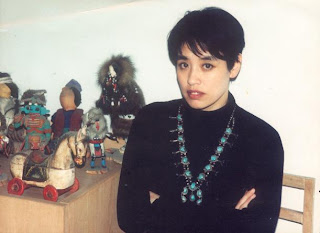
Know the Dance by the Scent 闻香识舞
by ZHAI Yongming tr. FAN Jinghua
I
Consciously or unconsciously
she sets the wind flying her butterfly clothing
the scent of the incense
dances till the song dies
She who has curvaceous hips is born to dance to death
Her legs her bosom her measurements
her face and the grimy water
all engaged in a debate from exhilaration to ecstasy
"Light cannot differentiate them"
Deep-buried sleep and the rolls on the floor
emit the smell of alcohol
1
有意或 无意
她把风抖开 她的蝶衣
香烟的香
把一曲舞尽
既有美臀 何不一舞至死
她的腿 胸 她的三围
脸和污水
酣畅至淋漓 都在争论
“灯光,它无法辨别”
深处的睡眠和满地的滚动
有酒精味
II
In a crowd her body huddles up
I know you except for your heart
I rely on you except for your magic liquid
I nurture you except for your body scent
This is temperament: when I stand erect
my skin casts light upon all the truth that can be found
I fly but naked eyes can not penetrate my flight
My dance absorbs the dust all around
2
在人群中 她的身体蜷缩
除了你的心 我认识你
除了你的魔液 我依赖你
除了你的体香 我滋养你
这就是脾气:全身挺直时
我的皮肤映照全场的真理
我飞翔 肉眼望不进
我的舞 吸干周围的尘土
III
My partner a boy in black
his limbs touch the floor with admirable grace
When I rotate as I turn into a column
someone is heard to say:
This sight is familiar to my eyes
I dance for familiarity and for unfamiliarity
Familiar scent leads me to heaven
The unfamiliar sprinkles down with the grimy drips
3
舞伴 一个黑衣男孩
四肢美妙着地
当我旋转 转成一根柱
另有一人在旁说话:
这情景熟悉
我为熟悉而舞 也为陌生
熟悉的香引我上天堂
陌生的香 随污水洒下
IV
Dance grows inside the body
You cannot see
When I dance it appears
When it appears I disappear
The dancer is calm but the dance
stirs Hands and legs
lift and lower My head darts and tosses
Intense or supple
all the dance movements
are connected to it
4
舞蹈在体内生长
你看不见
我舞 它出现
它出现 我消失不在
舞蹈者平静 而舞
运动 手和腿
举起又放下 头甩动
烈性的舞 和
软性的舞 都与它
有关
V
Inward scent drifts between the folds of collar
You haul me up into the air
Twelve dancers are dancing but won’t the radiance
cut deep in me again?
Prolonged movement trammels me
Prolongation spurs me to jump
My ascension has to draw support from your hair
The skeleton of four seasons relies on your song
It so happens that my heart takes you to wife
5
暗香 在衣领间浮动
你拖起我 不着地
十二舞徒在舞 难道灿烂
不再割伤我?
漫长的动作束缚我
漫长 令我跳跃
上升的我 要借助你的发
四季的骨骼 借你的歌
我的心 竟娶了你
VI
I have told her: before my eyes
were ignited by bombshell splinters
dance possessed me
Maiden scent resided in me and overflowed
my back of body liquid I made scent
especially when I groped along
Blindness makes dances absolute
It also makes them circulate in the nerves and brains
till the absoluteness reaches the ribs
6
我告诉她:在弹片
点燃我的眼睛之前
舞拥有我
我拥有少女香
溢出体液的背 制作香
特别是我摸索前行
盲 使舞绝对
又使舞循环到神经 大脑
绝对到 她肋骨
VII
The scents of devilwood and of monkshood
Scents of the same intensity pass by
I see her head emitting
I see her belly floating
I see her steps exuding
All that your sense of smell fails to note
is the scent she leaves behind
All the twists of her angles that my eyes fall on
are an integral part of her inside
I cry for the sake of the scent
She becomes a statue for the dance
We know this blood of another kind
7
木樨香 堇香
一派的香 走过
我看见她的头 在冒
我看见她的腹 在飘
我看见她的步履 在渗出
所有你们闻不到的
是她走过的香
所有我看到的 她关节的扭
是她内部的完整
我为香而哭
她为舞而凝固
懂得了 另一种血液
VIII
Golden claws so you’ve come
Dance to your full color in your dream
from summer to autumn I dance
till a thousand gold coins are dissipated
Dance of tears rushes into you
and smells out your scent so I cry
No game will last forever and ever
My dance surely will come to an end
8
金黄的爪子 你来了
斑斓起舞 在梦中
从夏天到秋天 我舞
把千金散尽
哭泣的舞 奔入你
闻到你的香 我哭泣
所有的游戏 没有不散
我的舞 有舞尽之时?
IX
Hands and legs are but manacles a sorrow
that ties me down
The water drops from us both drip
in our mutual dance gentle like clouds
A son or a daughter
is a chrysalis born in the wind
The scent from him or her
is the positive scent
from heart and hands
September 9, 1998
9
手脚乃镣铐 一个悲哀
拴住我
你我的水珠 在共同的舞中
滑落 温柔如云
一个儿子 或女儿
风中出生的蝶蛹
他 或 她 的香
是心和手的
肯定的香
1998.9.9.
ZHAI Yongming (b. 1955) is considered to be the best poet in her generation, which is now generally termed as the post-mystic generation (The second generation after Mao's time). She started writing poems in 1980 and her first poetry book Women was published in 1986. She now lives in Chengdu, Sichuan.
翟永明(1955- ),第三代女诗人,毕业于四川成都电子科技大学。1980年开始写作,1986年出版第一本诗集《女人》。现居成都,写作兼经营“白夜”酒吧。
Know the Dance by the Scent 闻香识舞
by ZHAI Yongming tr. FAN Jinghua
I
Consciously or unconsciously
she sets the wind flying her butterfly clothing
the scent of the incense
dances till the song dies
She who has curvaceous hips is born to dance to death
Her legs her bosom her measurements
her face and the grimy water
all engaged in a debate from exhilaration to ecstasy
"Light cannot differentiate them"
Deep-buried sleep and the rolls on the floor
emit the smell of alcohol
1
有意或 无意
她把风抖开 她的蝶衣
香烟的香
把一曲舞尽
既有美臀 何不一舞至死
她的腿 胸 她的三围
脸和污水
酣畅至淋漓 都在争论
“灯光,它无法辨别”
深处的睡眠和满地的滚动
有酒精味
II
In a crowd her body huddles up
I know you except for your heart
I rely on you except for your magic liquid
I nurture you except for your body scent
This is temperament: when I stand erect
my skin casts light upon all the truth that can be found
I fly but naked eyes can not penetrate my flight
My dance absorbs the dust all around
2
在人群中 她的身体蜷缩
除了你的心 我认识你
除了你的魔液 我依赖你
除了你的体香 我滋养你
这就是脾气:全身挺直时
我的皮肤映照全场的真理
我飞翔 肉眼望不进
我的舞 吸干周围的尘土
III
My partner a boy in black
his limbs touch the floor with admirable grace
When I rotate as I turn into a column
someone is heard to say:
This sight is familiar to my eyes
I dance for familiarity and for unfamiliarity
Familiar scent leads me to heaven
The unfamiliar sprinkles down with the grimy drips
3
舞伴 一个黑衣男孩
四肢美妙着地
当我旋转 转成一根柱
另有一人在旁说话:
这情景熟悉
我为熟悉而舞 也为陌生
熟悉的香引我上天堂
陌生的香 随污水洒下
IV
Dance grows inside the body
You cannot see
When I dance it appears
When it appears I disappear
The dancer is calm but the dance
stirs Hands and legs
lift and lower My head darts and tosses
Intense or supple
all the dance movements
are connected to it
4
舞蹈在体内生长
你看不见
我舞 它出现
它出现 我消失不在
舞蹈者平静 而舞
运动 手和腿
举起又放下 头甩动
烈性的舞 和
软性的舞 都与它
有关
V
Inward scent drifts between the folds of collar
You haul me up into the air
Twelve dancers are dancing but won’t the radiance
cut deep in me again?
Prolonged movement trammels me
Prolongation spurs me to jump
My ascension has to draw support from your hair
The skeleton of four seasons relies on your song
It so happens that my heart takes you to wife
5
暗香 在衣领间浮动
你拖起我 不着地
十二舞徒在舞 难道灿烂
不再割伤我?
漫长的动作束缚我
漫长 令我跳跃
上升的我 要借助你的发
四季的骨骼 借你的歌
我的心 竟娶了你
VI
I have told her: before my eyes
were ignited by bombshell splinters
dance possessed me
Maiden scent resided in me and overflowed
my back of body liquid I made scent
especially when I groped along
Blindness makes dances absolute
It also makes them circulate in the nerves and brains
till the absoluteness reaches the ribs
6
我告诉她:在弹片
点燃我的眼睛之前
舞拥有我
我拥有少女香
溢出体液的背 制作香
特别是我摸索前行
盲 使舞绝对
又使舞循环到神经 大脑
绝对到 她肋骨
VII
The scents of devilwood and of monkshood
Scents of the same intensity pass by
I see her head emitting
I see her belly floating
I see her steps exuding
All that your sense of smell fails to note
is the scent she leaves behind
All the twists of her angles that my eyes fall on
are an integral part of her inside
I cry for the sake of the scent
She becomes a statue for the dance
We know this blood of another kind
7
木樨香 堇香
一派的香 走过
我看见她的头 在冒
我看见她的腹 在飘
我看见她的步履 在渗出
所有你们闻不到的
是她走过的香
所有我看到的 她关节的扭
是她内部的完整
我为香而哭
她为舞而凝固
懂得了 另一种血液
VIII
Golden claws so you’ve come
Dance to your full color in your dream
from summer to autumn I dance
till a thousand gold coins are dissipated
Dance of tears rushes into you
and smells out your scent so I cry
No game will last forever and ever
My dance surely will come to an end
8
金黄的爪子 你来了
斑斓起舞 在梦中
从夏天到秋天 我舞
把千金散尽
哭泣的舞 奔入你
闻到你的香 我哭泣
所有的游戏 没有不散
我的舞 有舞尽之时?
IX
Hands and legs are but manacles a sorrow
that ties me down
The water drops from us both drip
in our mutual dance gentle like clouds
A son or a daughter
is a chrysalis born in the wind
The scent from him or her
is the positive scent
from heart and hands
September 9, 1998
9
手脚乃镣铐 一个悲哀
拴住我
你我的水珠 在共同的舞中
滑落 温柔如云
一个儿子 或女儿
风中出生的蝶蛹
他 或 她 的香
是心和手的
肯定的香
1998.9.9.
YU Xiang: Two Poems
Two Poems
by Yu Xiang tr. by Fan Jinghua
理所当然
当我年事已高,有些人
依然会 千里迢迢
赶来爱我 ; 而另一些人
会再次抛弃我
It Goes Without Saying
When I am getting senile, some will still
Come from afar, covering thousands of miles
To love me, while others
Will desert me, once again.
低调
一片叶子落下来
一夜之间只有一片叶子落下来
一年四季每夜都有一片叶子落下来
叶子落下来
落下来。听不见声音
就好像一个人独自呆了很久,然后死去
Low-Key
One leaf falls down
For the entire night long only one leaf has fallen
There is a leaf fallen every night every season every year
Leaves are falling down
Falling without sound
As one who lives alone holds out a long while
And then dies alone

宇向,诗人、作家。“70后”重要诗人。现居山东济南。参与中国当代艺术、地下音乐、先锋诗歌等活动多年之后,2000年左右开始写作,2002年获“柔刚诗歌奖”;2004年被评为中国当代“最受读者喜爱的10位女诗人”之一;2006年获首届“宇龙诗歌奖”。
YU Xiang is one of the key figures among the Post-70s poets, currently living in Jinan, Shandong Province. After years of engagement with contemporary art and music, she became devoted to writing around 2000. Her awards include the 11th Rou Gang Poetry Prize (2002), top ten women poets in China (2004) and the First Yu Long Poetry Prize (2006).
by Yu Xiang tr. by Fan Jinghua
理所当然
当我年事已高,有些人
依然会 千里迢迢
赶来爱我 ; 而另一些人
会再次抛弃我
It Goes Without Saying
When I am getting senile, some will still
Come from afar, covering thousands of miles
To love me, while others
Will desert me, once again.
低调
一片叶子落下来
一夜之间只有一片叶子落下来
一年四季每夜都有一片叶子落下来
叶子落下来
落下来。听不见声音
就好像一个人独自呆了很久,然后死去
Low-Key
One leaf falls down
For the entire night long only one leaf has fallen
There is a leaf fallen every night every season every year
Leaves are falling down
Falling without sound
As one who lives alone holds out a long while
And then dies alone
宇向,诗人、作家。“70后”重要诗人。现居山东济南。参与中国当代艺术、地下音乐、先锋诗歌等活动多年之后,2000年左右开始写作,2002年获“柔刚诗歌奖”;2004年被评为中国当代“最受读者喜爱的10位女诗人”之一;2006年获首届“宇龙诗歌奖”。
YU Xiang is one of the key figures among the Post-70s poets, currently living in Jinan, Shandong Province. After years of engagement with contemporary art and music, she became devoted to writing around 2000. Her awards include the 11th Rou Gang Poetry Prize (2002), top ten women poets in China (2004) and the First Yu Long Poetry Prize (2006).
Wednesday, October 10, 2007
Fan Jinghua: Dreams
Dreams
A restless night, with intervals of half sobriety. In the dreams, I was back to the past, to several women. On a small street, she descended from the top of a slope, bumping into me. She had the same walking and apparel: a white bag hanging on one shoulder, a green woolen overcoat. Catching sight of me, she startled to a stop, slanted her eyes, and lowered her head, shying by.
I, half-awake, groped to the left while turning to the right. No one on the bed, empty except for me. There was a sadness in her eyes, but perhaps only my imagination.
Twisting to find a comfortable position to resume my sleep.
I found myself in a town I had never been before. It is her home. All her family members, none of whom I had met, were there, including her long-dead parents. I had a vague idea that maybe that was a partial dream, and her father was blind, but her mother, although probably there, was not seen. The family was at a poker game, around a round table; all the furniture was Chinese Ming-style. I did not know the rules, so I was walking around the rooms among the hanging curtains. Suddenly, we held together tight between the curtains, kissed wet, and thighs stuck close. Her sisters came by, seemingly intentional, and smiled ‘sorry.’
Woken by the rain. It must be cats and dogs outside.
I was back to her high room in the apartment house. In the distance, there was a tower beyond a stretch of lawn and a small lake. I was aware that there had been a traffic accident behind the trees that covered the road down there. It took place only days ago, but I was not sure how many days ago. She was sleeping then. There must have been some screeches, as if even I could hear. I realized that she had told me already.
Walking the road toward the farmer’s market, we were met by Alyce. Alyce was talking to her, while I stood a little aside. Alyce glimpsed me while talking, smilingly. She told me later that Alyce said to her: This is a gorgeous man. She replied: A keeper.
When I woke up again, it was now; but I fell back to sleep with the rain sound.
At my parents’. I saw several beautiful waterfowls in the vat, like Chinese lovebirds, but they dived. I asked my mother whether they were mandarin ducks, and mom said they were some kind of fish. On the wall of the vat, there were some creatures with shells, conch-like. Their bodies sprawled out, with colorful glitters, and a pair of beautiful human eyes, shiny and watery, dwells under the antennae. I gazed into them, and they gazed back. I forgot when these shell creatures turned away, a little detached. Then, I turned to Mom: I’d better be off now. Mom knew that my wife and kid were in her parents’ and I went back alone. Mom said: Eat before you go. She had prepared food for my dad, enough for me too. I said the bus would be there anytime. It seemed I did not eat. From what my mom said, I sensed that my wife was my first love.
Then, I was on the gravel road in front of my former middle school, and it was drizzling. Standing on the road, looking to the north, I found the same sight of the school where I spent about four years of my adolescence, during which I had secretly revealed to one or two best friends my love toward some girls. Those unpronounced loves, those transient loves; now they existed only in memory. However, many happenings later seemed to be the realizations of those dreams. Of course, the school has totally changed, and my former classmates are now the teachers. Memory clashes with reality.
My wife was looking for something in a pile of something. I could not make out exactly what were in the heap. Books, old clothes, music cassettes, or CDs? Anyway, I said to her: “Don’t bother searching there. What you are looking for are for our son, but we are not married yet.” She did not seem to understand that we had not started a family yet. She did not understand that we were at present living in the past.
I woke up.
 My Mom is hoeing (June 6, 2005)
梦
一夜没睡好,醒来多次。梦见回到了过去,见到几个女人。在某条小街上,她从坡上下来,我迎面而上。她还是背着那个白色的挎包,绿色的粗呢罩衣,怔了一下,她躲闪了眼睛,低头从我身边走了。醒来,右侧身,左手放到床头,没有人没有影子,空的。她的眼神似乎忧郁,也许我的想象而已。
翻身找到一个姿势,继续睡了。
到了那个小镇,她的家。我从未见过的她的家人都在,有她早已死去的父母。梦中,她父亲是一个盲人,她母亲也应该在,但我似乎没有见到。一家人为着一个小圆桌子在打扑克,桌椅都是中式的,很古朴。我不知道规则,所以在挂满帘子的房间走动。和她在帘子中间抱在一起,接吻,胯腿贴得很紧;她的姐妹有时走过来,似乎是故意的,笑着说对不起。
在雨声中醒来,外面应该是瓢泼一样吧。
朦胧中又见到窗外一片绿草地,水塔,小湖。想着那楼下的树丛背后放佛有一场交通事故发生在昨夜,在她睡着的时候。我意识到,这都是因为她告诉我的。走在那个通往农贸集市的路上,Alyce走过,和她说话时满脸笑意的看着我,她后来告诉我说Alyce对她说This is a gorgeous man;她说:A keeper。
我醒来的时候却已经是现在了,醒了又朦胧睡去。
回到父母身边,看到一口大水缸里有几只非常美丽的水鸟,和鸳鸯很像,但沉在水下,我问妈这是鸳鸯吗?妈说,不是,是一种鱼。缸底还有几只大螺丝一样的东西,身体伸出壳子,放着五彩的光,触角下有一对乌黑发亮的水灵的美丽眼睛,人的。我凝视着,它们也对着我看。出神很久,然后那些螺丝扭头缓缓地走了,带着漠不关己或者无聊的神态。然后我说:妈,我该走了。妻子和孩子在她父母家,我独自一人抽空回来一下。妈说,吃一点东西吧,给爸爸做的,顺便吃一点再走。我说,班车该到了。似乎并没有吃。从妈的话中感觉到我的妻子还是当初的那个人。
路过县城中学母校门前的石子路,正下着小雨。站在路口,向北望去,还是当年的景象。这儿见证了我青春期中的四年左右时光,曾经和一两个同学私下分享朦胧的爱,从未表白,也从未持续多久。那些短暂的爱恋对象如今只存在于记忆。然而,很多后来的事情似乎在那样的时候就已经见到了。当然,当年的样子早已经不在了,当年的同窗如今是那儿的老师。记忆与现实彼此冲撞。
梦见妻子在一堆东西中找着什么。那堆东西是什么?书、旧衣服,还有什么?旧磁带和CD?我对妻子说:别找了,你要找的东西是儿子用的,但我们现在还没有结婚呢。她似乎不知道我们还没有成家,她似乎不知道我们此刻正活在过去。
醒了。
A restless night, with intervals of half sobriety. In the dreams, I was back to the past, to several women. On a small street, she descended from the top of a slope, bumping into me. She had the same walking and apparel: a white bag hanging on one shoulder, a green woolen overcoat. Catching sight of me, she startled to a stop, slanted her eyes, and lowered her head, shying by.
I, half-awake, groped to the left while turning to the right. No one on the bed, empty except for me. There was a sadness in her eyes, but perhaps only my imagination.
Twisting to find a comfortable position to resume my sleep.
I found myself in a town I had never been before. It is her home. All her family members, none of whom I had met, were there, including her long-dead parents. I had a vague idea that maybe that was a partial dream, and her father was blind, but her mother, although probably there, was not seen. The family was at a poker game, around a round table; all the furniture was Chinese Ming-style. I did not know the rules, so I was walking around the rooms among the hanging curtains. Suddenly, we held together tight between the curtains, kissed wet, and thighs stuck close. Her sisters came by, seemingly intentional, and smiled ‘sorry.’
Woken by the rain. It must be cats and dogs outside.
I was back to her high room in the apartment house. In the distance, there was a tower beyond a stretch of lawn and a small lake. I was aware that there had been a traffic accident behind the trees that covered the road down there. It took place only days ago, but I was not sure how many days ago. She was sleeping then. There must have been some screeches, as if even I could hear. I realized that she had told me already.
Walking the road toward the farmer’s market, we were met by Alyce. Alyce was talking to her, while I stood a little aside. Alyce glimpsed me while talking, smilingly. She told me later that Alyce said to her: This is a gorgeous man. She replied: A keeper.
When I woke up again, it was now; but I fell back to sleep with the rain sound.
At my parents’. I saw several beautiful waterfowls in the vat, like Chinese lovebirds, but they dived. I asked my mother whether they were mandarin ducks, and mom said they were some kind of fish. On the wall of the vat, there were some creatures with shells, conch-like. Their bodies sprawled out, with colorful glitters, and a pair of beautiful human eyes, shiny and watery, dwells under the antennae. I gazed into them, and they gazed back. I forgot when these shell creatures turned away, a little detached. Then, I turned to Mom: I’d better be off now. Mom knew that my wife and kid were in her parents’ and I went back alone. Mom said: Eat before you go. She had prepared food for my dad, enough for me too. I said the bus would be there anytime. It seemed I did not eat. From what my mom said, I sensed that my wife was my first love.
Then, I was on the gravel road in front of my former middle school, and it was drizzling. Standing on the road, looking to the north, I found the same sight of the school where I spent about four years of my adolescence, during which I had secretly revealed to one or two best friends my love toward some girls. Those unpronounced loves, those transient loves; now they existed only in memory. However, many happenings later seemed to be the realizations of those dreams. Of course, the school has totally changed, and my former classmates are now the teachers. Memory clashes with reality.
My wife was looking for something in a pile of something. I could not make out exactly what were in the heap. Books, old clothes, music cassettes, or CDs? Anyway, I said to her: “Don’t bother searching there. What you are looking for are for our son, but we are not married yet.” She did not seem to understand that we had not started a family yet. She did not understand that we were at present living in the past.
I woke up.
My Mom is hoeing (June 6, 2005)梦
一夜没睡好,醒来多次。梦见回到了过去,见到几个女人。在某条小街上,她从坡上下来,我迎面而上。她还是背着那个白色的挎包,绿色的粗呢罩衣,怔了一下,她躲闪了眼睛,低头从我身边走了。醒来,右侧身,左手放到床头,没有人没有影子,空的。她的眼神似乎忧郁,也许我的想象而已。
翻身找到一个姿势,继续睡了。
到了那个小镇,她的家。我从未见过的她的家人都在,有她早已死去的父母。梦中,她父亲是一个盲人,她母亲也应该在,但我似乎没有见到。一家人为着一个小圆桌子在打扑克,桌椅都是中式的,很古朴。我不知道规则,所以在挂满帘子的房间走动。和她在帘子中间抱在一起,接吻,胯腿贴得很紧;她的姐妹有时走过来,似乎是故意的,笑着说对不起。
在雨声中醒来,外面应该是瓢泼一样吧。
朦胧中又见到窗外一片绿草地,水塔,小湖。想着那楼下的树丛背后放佛有一场交通事故发生在昨夜,在她睡着的时候。我意识到,这都是因为她告诉我的。走在那个通往农贸集市的路上,Alyce走过,和她说话时满脸笑意的看着我,她后来告诉我说Alyce对她说This is a gorgeous man;她说:A keeper。
我醒来的时候却已经是现在了,醒了又朦胧睡去。
回到父母身边,看到一口大水缸里有几只非常美丽的水鸟,和鸳鸯很像,但沉在水下,我问妈这是鸳鸯吗?妈说,不是,是一种鱼。缸底还有几只大螺丝一样的东西,身体伸出壳子,放着五彩的光,触角下有一对乌黑发亮的水灵的美丽眼睛,人的。我凝视着,它们也对着我看。出神很久,然后那些螺丝扭头缓缓地走了,带着漠不关己或者无聊的神态。然后我说:妈,我该走了。妻子和孩子在她父母家,我独自一人抽空回来一下。妈说,吃一点东西吧,给爸爸做的,顺便吃一点再走。我说,班车该到了。似乎并没有吃。从妈的话中感觉到我的妻子还是当初的那个人。
路过县城中学母校门前的石子路,正下着小雨。站在路口,向北望去,还是当年的景象。这儿见证了我青春期中的四年左右时光,曾经和一两个同学私下分享朦胧的爱,从未表白,也从未持续多久。那些短暂的爱恋对象如今只存在于记忆。然而,很多后来的事情似乎在那样的时候就已经见到了。当然,当年的样子早已经不在了,当年的同窗如今是那儿的老师。记忆与现实彼此冲撞。
梦见妻子在一堆东西中找着什么。那堆东西是什么?书、旧衣服,还有什么?旧磁带和CD?我对妻子说:别找了,你要找的东西是儿子用的,但我们现在还没有结婚呢。她似乎不知道我们还没有成家,她似乎不知道我们此刻正活在过去。
醒了。
Tuesday, October 9, 2007
Fan Jinghua: Faith
Faith
The aftershock of a windfall. The lake peels
And peels off smiles, untiringly.
Its swaddle wraps and unwraps, a red
Plumpness, more apples of autumn on the boughs.
Leaves filter the sunrays, filter the rains
Too, but not clouds that hang low and sluggish.
These web-fingered hands scratch but never pierce,
And they also fall; in time, they fall more readily.
Now, hovering on the water is a restless stillness, indifferent
To the purblind birds, that breathes in the sky color
And, saturated, it wobbles slowly downward, prostrate to the cold.
This is an hour for ghosts, the invisible bags.
They may fly by wriggling. How energetic and full of freedom!
Even your soul and spirit itch to come out
Of the thresholds of the eyes, mouth and nostrils.
But hold your breath and walk on in the rustles, please!
If you need words, whisper “love” in my ear,
And do not cry out “I need” in the open air.
In the dark, trust the carnal,
Even if I am an apple worm-eaten at the core.
Oct. 8, 2007
Note: This poem was written upon the suicide of a poet.
信 念
风吹落的苹果比风更令河水心悸,
它的微笑揭掉一层又一层不倦的皮。
波心的襁褓裹起、打开、打开又裹紧
胖乎乎的粉嫩润红,那么多的秋苹果仍挂在枝头。
叶子过滤着阳光,叶子也过滤着雨,
却无法过滤低垂而迟缓的云。
这些蹼指的小手只可用以瘙痒,却不能刺穿,
它们会枯萎;时候到了,比苹果凋落得更加轻易。
此刻,悬在水面上的是一种静止,淡漠地
吸入天的颜色,不理会逐渐盲冥的归鸟,
慢慢地,它摇摆着沉降,俯伏在一片冷冷的水面。
这个时辰属于鬼魂,那一只只肉眼看不见的袋子。
它们胀满了自由、只需扭动就能飘忽;精力多么旺盛!
甚至你的魂魄也痒了,一次次
冲击你眼睛、嘴巴、鼻孔的门限。
屏住呼吸,求你了,在飒飒的风声中随我走开。
如果你需要说话,只对着我的耳朵呼气或低语一声“爱”,
千万不要在此刻出声,对空气呼叫“我要”。
黑暗中,你需要相信肉体和欲望,
哪怕我是一只内核已被虫蚀的苹果。
2007年10月9日
The aftershock of a windfall. The lake peels
And peels off smiles, untiringly.
Its swaddle wraps and unwraps, a red
Plumpness, more apples of autumn on the boughs.
Leaves filter the sunrays, filter the rains
Too, but not clouds that hang low and sluggish.
These web-fingered hands scratch but never pierce,
And they also fall; in time, they fall more readily.
Now, hovering on the water is a restless stillness, indifferent
To the purblind birds, that breathes in the sky color
And, saturated, it wobbles slowly downward, prostrate to the cold.
This is an hour for ghosts, the invisible bags.
They may fly by wriggling. How energetic and full of freedom!
Even your soul and spirit itch to come out
Of the thresholds of the eyes, mouth and nostrils.
But hold your breath and walk on in the rustles, please!
If you need words, whisper “love” in my ear,
And do not cry out “I need” in the open air.
In the dark, trust the carnal,
Even if I am an apple worm-eaten at the core.
Oct. 8, 2007
Note: This poem was written upon the suicide of a poet.
信 念
风吹落的苹果比风更令河水心悸,
它的微笑揭掉一层又一层不倦的皮。
波心的襁褓裹起、打开、打开又裹紧
胖乎乎的粉嫩润红,那么多的秋苹果仍挂在枝头。
叶子过滤着阳光,叶子也过滤着雨,
却无法过滤低垂而迟缓的云。
这些蹼指的小手只可用以瘙痒,却不能刺穿,
它们会枯萎;时候到了,比苹果凋落得更加轻易。
此刻,悬在水面上的是一种静止,淡漠地
吸入天的颜色,不理会逐渐盲冥的归鸟,
慢慢地,它摇摆着沉降,俯伏在一片冷冷的水面。
这个时辰属于鬼魂,那一只只肉眼看不见的袋子。
它们胀满了自由、只需扭动就能飘忽;精力多么旺盛!
甚至你的魂魄也痒了,一次次
冲击你眼睛、嘴巴、鼻孔的门限。
屏住呼吸,求你了,在飒飒的风声中随我走开。
如果你需要说话,只对着我的耳朵呼气或低语一声“爱”,
千万不要在此刻出声,对空气呼叫“我要”。
黑暗中,你需要相信肉体和欲望,
哪怕我是一只内核已被虫蚀的苹果。
2007年10月9日
Fan Jinghua: Chinese Spirits for An American Lady
Chinese Spirits for An American Lady
For J. W.
You are not armed for this yet,
This bottle of liquor with a cap of pewter
Screwed tight around its neck.
You are not used to opening it
With your teeth;
You are not ready for that.
You say you do not go alcoholic in the States
But tasting Chinese spirits would be something
You could boast
When you go back.
So I lend you not my hand but my teeth
And spare you the searching for a Swiss knife.
Before I can warn, you have already gargled
The colorless liquid into your mouth
The way your people drink beer,
Not the way we sip.
"Oh, so strong is the kick!"
You tear, you snivel, and you dribble.
We are planning an evening out in the lingering light,
And in America, a day is breaking.
For many Chinese, your given name is associated with love
Through a novel, but few think of the origin of your family name.
April 1995
Note: This is the first poem I wrote in English. It was inspired by an American visiting teacher from Elon University, NC, to the Chinese university I taught.

美国女士的中国白酒
为J. W. 而作
你没有相关配备
这酒瓶
有白铁的盖子紧紧地压在瓶颈
你还没有学会
像他们那样使用牙齿
你说你并不喝酒精
但是来到中国你必须尝一口中国白酒
才会有本钱向你的同胞吹嘘
于是我借出了我的牙齿
免了你到处寻找瑞士军刀
我还没来得及警告
你已举瓶仰头将那无色液体倒进喉咙
犹如你的国人喝着啤酒
而非我们的小酌
“啊,够冲,够劲”
你淌眼泪,流鼻涕,拖着口水
那时夕阳正艳丽,我们在计划夜晚的去处
而你的故乡新的一天就要开始
大多数中国人都是因为一本小说而喜欢你的闺名
而少有人知道你的姓氏并不那么温和
For J. W.
You are not armed for this yet,
This bottle of liquor with a cap of pewter
Screwed tight around its neck.
You are not used to opening it
With your teeth;
You are not ready for that.
You say you do not go alcoholic in the States
But tasting Chinese spirits would be something
You could boast
When you go back.
So I lend you not my hand but my teeth
And spare you the searching for a Swiss knife.
Before I can warn, you have already gargled
The colorless liquid into your mouth
The way your people drink beer,
Not the way we sip.
"Oh, so strong is the kick!"
You tear, you snivel, and you dribble.
We are planning an evening out in the lingering light,
And in America, a day is breaking.
For many Chinese, your given name is associated with love
Through a novel, but few think of the origin of your family name.
April 1995
Note: This is the first poem I wrote in English. It was inspired by an American visiting teacher from Elon University, NC, to the Chinese university I taught.
美国女士的中国白酒
为J. W. 而作
你没有相关配备
这酒瓶
有白铁的盖子紧紧地压在瓶颈
你还没有学会
像他们那样使用牙齿
你说你并不喝酒精
但是来到中国你必须尝一口中国白酒
才会有本钱向你的同胞吹嘘
于是我借出了我的牙齿
免了你到处寻找瑞士军刀
我还没来得及警告
你已举瓶仰头将那无色液体倒进喉咙
犹如你的国人喝着啤酒
而非我们的小酌
“啊,够冲,够劲”
你淌眼泪,流鼻涕,拖着口水
那时夕阳正艳丽,我们在计划夜晚的去处
而你的故乡新的一天就要开始
大多数中国人都是因为一本小说而喜欢你的闺名
而少有人知道你的姓氏并不那么温和
Monday, October 8, 2007
Fan Jinghua: Face Blindness
Face Blindness
For a Suicide Poet
This sickness injures your heart and memory,
The way people claim indignant prejudice.
You see objects into their bones, you see their flesh too,
But as for human beings, you only hear the voices,
Voices memorized as echoes, void and distant.
The infantile smiles are broken arcs, shadows against the white wall,
And all the grown-ups have their tongues in the cheeks,
But you cannot see the funniness in their features,
Or hear the amusing echoes through the masks over those faces.
Your agnosia of love toward the social is taken over
By your delusion of the double, marrow-chilling.
You dare not let yourself sleep into the late night, so you hack out
A line drawing of words, with a polished meat cleaver,
And it leaves much vacuum for any other to fill.
As the winter is drawing near, when I begin to feel cold,
I begin to feel I have always loved your wife and children, in another way,
Heavily. I could embrace them, hard to the heart.
Does it ever strike you it might be your kind that will hurt them again?
It is early fall, and only occasional leaves fall
Marrow-poisoned and half-green, veins still indistinctive.
Oct. 7, 2007
Note: A Chinese poet called Yu Di (余地) cut his artery in the neck late Oct 4 night with a kitchen cleaver.
 YU Di (1977-2007)
脸 盲
致一个自杀的诗人
这病损害你的心与记忆,
正如人们有权从牙缝中挤出义愤的偏见。
你看到物体的骨头,你也看到物体的肉,
而对于人,你却只能听见声音,
听成记忆中的回声,空蒙而遥远。
婴儿的微笑在你眼中只是一些破碎的弧线,
而他们的背景却那么分明,是一堵白墙;
所有成人的脸颊都呈现为舌头打滑的轮廓,
可你看不到那些特征的滑稽,
也听不到人脸面具中的洞穴会传来有趣的回声。
你无法认知你内心对于人世的爱,
觉得这社会已被冒名顶替,这恐惧令你骨髓冰冷。
你不敢让自己沉睡到后半夜,所以你磨亮了
切肉刀,砍出一幅文字的线条画,
那中间留有无穷的真空,让愿意的人去填充。
冬日逐渐来临,我开始感到寒意的逼近,
我也开始感到我一直爱着你的妻子和婴孩,
以另一种方式,很沉实。
我会拥抱他们,紧贴在胸前,令我们都感到生硬。
而你赴死之时,是否闪过一个念头,
再次伤害他们的可能还是你的同类?
秋季尚早,只偶尔才有半绿的叶子落下,
骨髓中了毒,纹理还难以辨别。
注:脸盲face blindness(prosopagnosia面孔失认症)是一种认知精神紊乱,病人无法认出并记住人脸特征,甚至连自己的脸也可能不认识,但是对于物体的认知却没有问题。与此相对的一种精神疾病是Capgras syndrome卡普格拉综合征(这位法国医生最早使用的术语是l’illusion des soisies),也就是delusion of the double替身综合症,这样的人坚持认为周围认识的人是冒名顶替的。
2007年10月7日
For a Suicide Poet
This sickness injures your heart and memory,
The way people claim indignant prejudice.
You see objects into their bones, you see their flesh too,
But as for human beings, you only hear the voices,
Voices memorized as echoes, void and distant.
The infantile smiles are broken arcs, shadows against the white wall,
And all the grown-ups have their tongues in the cheeks,
But you cannot see the funniness in their features,
Or hear the amusing echoes through the masks over those faces.
Your agnosia of love toward the social is taken over
By your delusion of the double, marrow-chilling.
You dare not let yourself sleep into the late night, so you hack out
A line drawing of words, with a polished meat cleaver,
And it leaves much vacuum for any other to fill.
As the winter is drawing near, when I begin to feel cold,
I begin to feel I have always loved your wife and children, in another way,
Heavily. I could embrace them, hard to the heart.
Does it ever strike you it might be your kind that will hurt them again?
It is early fall, and only occasional leaves fall
Marrow-poisoned and half-green, veins still indistinctive.
Oct. 7, 2007
Note: A Chinese poet called Yu Di (余地) cut his artery in the neck late Oct 4 night with a kitchen cleaver.
YU Di (1977-2007)脸 盲
致一个自杀的诗人
这病损害你的心与记忆,
正如人们有权从牙缝中挤出义愤的偏见。
你看到物体的骨头,你也看到物体的肉,
而对于人,你却只能听见声音,
听成记忆中的回声,空蒙而遥远。
婴儿的微笑在你眼中只是一些破碎的弧线,
而他们的背景却那么分明,是一堵白墙;
所有成人的脸颊都呈现为舌头打滑的轮廓,
可你看不到那些特征的滑稽,
也听不到人脸面具中的洞穴会传来有趣的回声。
你无法认知你内心对于人世的爱,
觉得这社会已被冒名顶替,这恐惧令你骨髓冰冷。
你不敢让自己沉睡到后半夜,所以你磨亮了
切肉刀,砍出一幅文字的线条画,
那中间留有无穷的真空,让愿意的人去填充。
冬日逐渐来临,我开始感到寒意的逼近,
我也开始感到我一直爱着你的妻子和婴孩,
以另一种方式,很沉实。
我会拥抱他们,紧贴在胸前,令我们都感到生硬。
而你赴死之时,是否闪过一个念头,
再次伤害他们的可能还是你的同类?
秋季尚早,只偶尔才有半绿的叶子落下,
骨髓中了毒,纹理还难以辨别。
注:脸盲face blindness(prosopagnosia面孔失认症)是一种认知精神紊乱,病人无法认出并记住人脸特征,甚至连自己的脸也可能不认识,但是对于物体的认知却没有问题。与此相对的一种精神疾病是Capgras syndrome卡普格拉综合征(这位法国医生最早使用的术语是l’illusion des soisies),也就是delusion of the double替身综合症,这样的人坚持认为周围认识的人是冒名顶替的。
2007年10月7日
Fan Jinghua: The Moon after a Festive Season
The Moon after a Festive Season
The moon is high, high and waning, alone above the awakening city.
A late day in a lunar month after the Harvest.
It is morning, cool. What else can it tell?
The sky is vastly clean, bluish and uninhabited.
If you don’t resort to memory, you may easily slip into
Believing that your limbs are paddles which hang loose beside your trunk.
The world silently sways and heaves; water, water, water everywhere,
Water with foams. You are a boat, an island, a clam shell.
When the dry season in the sky is ending, before the refreshed wet settles in,
The beachcomber in ragged overalls like a cloud pokes and stirs
The plain stretch of fine sand, with his feet, with the stick in his hand,
And he will drag out of the silted slit a strap, a broken leather handbag,
And before groping into it, he presses its corner with his thumb and forefinger.
If he finds coins or letters, he will bury the bag under a bush;
If nothing found, he throws it back to the water, into a kelp forest.
His bucket is never full, and his bucket is never alive,
But the moon on the water is shattered, and for a moment
It even disappears, and slowly it will come back to re-establish itself.
Oct. 5, 2007
节庆后的月亮
月亮很高,高而且清瘦,独自浮在开始醒来的城市上空。
收获季节过了,一个农历的月份将要结束。
此刻是清晨,微凉。它还能说明什么?
天空杳阔,明净,没有居民,幽蓝中带着灰白。
走在这样的低处,如果不诉求于记忆,你可能一不小心
便以为四肢是短木浆,松垮垮地搁在你躯干的船舷上。
世界在周围涌动,无声地喘息;水,水,到处是水,
带着浮沫。你是一只船,一座小岛,一瓣蚌壳。
天空的旱季行将结束,而新的雨季还没有降临,
那捡垃圾的老头,套在褴褛的工装裤里,像一片云,在朴素的细沙滩上
走走停停,不时地用脚踢踢、挖挖,手中的小棍戳戳、拨拨;
他终会从淤实的水眼中拽出一根带子,一只破烂的皮包,
用拇指与食指捏捏它的角,然后伸进去摸摸。
如果他找到几枚硬币或者信件,他会把手提包埋葬在灌木下;
如果什么也没有,他就将皮包扔回水中,沉入海带的森林。
他的塑料桶从未装满,他的塑料桶从不装生机,
但是水上的月亮会破碎,甚至一时间
还会消失不见,然后慢慢地,它会重新聚合起自己。
2007年10月6日
The moon is high, high and waning, alone above the awakening city.
A late day in a lunar month after the Harvest.
It is morning, cool. What else can it tell?
The sky is vastly clean, bluish and uninhabited.
If you don’t resort to memory, you may easily slip into
Believing that your limbs are paddles which hang loose beside your trunk.
The world silently sways and heaves; water, water, water everywhere,
Water with foams. You are a boat, an island, a clam shell.
When the dry season in the sky is ending, before the refreshed wet settles in,
The beachcomber in ragged overalls like a cloud pokes and stirs
The plain stretch of fine sand, with his feet, with the stick in his hand,
And he will drag out of the silted slit a strap, a broken leather handbag,
And before groping into it, he presses its corner with his thumb and forefinger.
If he finds coins or letters, he will bury the bag under a bush;
If nothing found, he throws it back to the water, into a kelp forest.
His bucket is never full, and his bucket is never alive,
But the moon on the water is shattered, and for a moment
It even disappears, and slowly it will come back to re-establish itself.
Oct. 5, 2007
节庆后的月亮
月亮很高,高而且清瘦,独自浮在开始醒来的城市上空。
收获季节过了,一个农历的月份将要结束。
此刻是清晨,微凉。它还能说明什么?
天空杳阔,明净,没有居民,幽蓝中带着灰白。
走在这样的低处,如果不诉求于记忆,你可能一不小心
便以为四肢是短木浆,松垮垮地搁在你躯干的船舷上。
世界在周围涌动,无声地喘息;水,水,到处是水,
带着浮沫。你是一只船,一座小岛,一瓣蚌壳。
天空的旱季行将结束,而新的雨季还没有降临,
那捡垃圾的老头,套在褴褛的工装裤里,像一片云,在朴素的细沙滩上
走走停停,不时地用脚踢踢、挖挖,手中的小棍戳戳、拨拨;
他终会从淤实的水眼中拽出一根带子,一只破烂的皮包,
用拇指与食指捏捏它的角,然后伸进去摸摸。
如果他找到几枚硬币或者信件,他会把手提包埋葬在灌木下;
如果什么也没有,他就将皮包扔回水中,沉入海带的森林。
他的塑料桶从未装满,他的塑料桶从不装生机,
但是水上的月亮会破碎,甚至一时间
还会消失不见,然后慢慢地,它会重新聚合起自己。
2007年10月6日
Friday, October 5, 2007
Reading Daphis and Chloe
Reading Daphis and Chloe
(Chinese original written on Aug.1, 2005)
Afternoon, reclining on a couch, I read Ronald MaCail’s translation of Daphis and Chloe (OUP 2002). This is the prototype of romance, a pastoral. There seems to have a Chinese translation which I read in university. Remember Ravel’s ballet music, quite nice. The setting of this pastoral is Lesbos, the hometown of Sappho, and the word root of Lesbian (female homosexual). The Preface starts with: Out hunting in Lesbos,/ in a grove sacred to the Nymphs/ I saw a sight/ whose like, for beauty, I had never seen--/ a painting, / a love story.
It is notable that Western novel starts with a two-dimension narration: description and painting. Here, a sight is a painting as well as a story. The sight of a site. This is the tradition of ekphrasis. Chinese literature privileges lyricism, and there is no ekphrasis in this sense.
Chloe’s first sensual feel of love and lust is stupefyingly vivid:
Now I am sick,
but I don’t know what with;
I am in pain,
yet have no wound upon me;
I am unhappy,
yet none of my sheep has been lost;
I am on fire,
and yet I am sitting deep in the shade.
How often have brambles scratched me
without making me weep!
How often have bees stung me
without making me cry!
Of course, these two are too innocent to quench the fire of desire, and they eventually learn from the sheep how to make love. Human beings have to learn the rear posture of sex from animals.
下午,躺在沙发上,又看了一遍古希腊的小说Daphnis and Chloe《达夫尼斯与克洛伊》(牛津大学出版社2002年Ronald McCail的新译本)。这可说是所有爱情小说的起源,似乎国内有过译本;而拉威尔的芭蕾舞音乐也很不错。这个田园牧歌的地点是Lesbos,也就是古希腊第一女诗人萨芙的故乡。《序幕》开始:
在Lesbos出猎之时
在水泽仙女们的圣林
我眼见一景
那般美色我未曾目睹—
一幅画
一场爱情。
西方小说之初,描写就在两个层面上展开:叙事与绘画。这里,一个场景就是一幅画,就是一个故事。对于一个场景/场地的视觉呈现,这是ekphrasis传统。中国重抒情轻叙事,因此没有严格意义上的ekphrasis(叙画诗文)。
Chloe怀春的一段,写得痴痴的:
眼下我病了,
却不知道有啥问题;
我非常痛苦,
却全身没有伤口;
我很不快乐,
但我并没有丢失一只羊儿的羊儿;
我火烧火燎,
而我正坐在树荫之下。
灌木刺扎了我多少次了,
而我没有一滴泪水!
蜜蜂蜇了我多少回了,
而我没有叫喊一声!
当然,这两个不解风情的少男少女是不知道如何消除这种“欲火”的,所以他们就学着羊的样子。呵呵,人类得向动物学习男后位。
(Chinese original written on Aug.1, 2005)
Afternoon, reclining on a couch, I read Ronald MaCail’s translation of Daphis and Chloe (OUP 2002). This is the prototype of romance, a pastoral. There seems to have a Chinese translation which I read in university. Remember Ravel’s ballet music, quite nice. The setting of this pastoral is Lesbos, the hometown of Sappho, and the word root of Lesbian (female homosexual). The Preface starts with: Out hunting in Lesbos,/ in a grove sacred to the Nymphs/ I saw a sight/ whose like, for beauty, I had never seen--/ a painting, / a love story.
It is notable that Western novel starts with a two-dimension narration: description and painting. Here, a sight is a painting as well as a story. The sight of a site. This is the tradition of ekphrasis. Chinese literature privileges lyricism, and there is no ekphrasis in this sense.
Chloe’s first sensual feel of love and lust is stupefyingly vivid:
Now I am sick,
but I don’t know what with;
I am in pain,
yet have no wound upon me;
I am unhappy,
yet none of my sheep has been lost;
I am on fire,
and yet I am sitting deep in the shade.
How often have brambles scratched me
without making me weep!
How often have bees stung me
without making me cry!
Of course, these two are too innocent to quench the fire of desire, and they eventually learn from the sheep how to make love. Human beings have to learn the rear posture of sex from animals.
下午,躺在沙发上,又看了一遍古希腊的小说Daphnis and Chloe《达夫尼斯与克洛伊》(牛津大学出版社2002年Ronald McCail的新译本)。这可说是所有爱情小说的起源,似乎国内有过译本;而拉威尔的芭蕾舞音乐也很不错。这个田园牧歌的地点是Lesbos,也就是古希腊第一女诗人萨芙的故乡。《序幕》开始:
在Lesbos出猎之时
在水泽仙女们的圣林
我眼见一景
那般美色我未曾目睹—
一幅画
一场爱情。
西方小说之初,描写就在两个层面上展开:叙事与绘画。这里,一个场景就是一幅画,就是一个故事。对于一个场景/场地的视觉呈现,这是ekphrasis传统。中国重抒情轻叙事,因此没有严格意义上的ekphrasis(叙画诗文)。
Chloe怀春的一段,写得痴痴的:
眼下我病了,
却不知道有啥问题;
我非常痛苦,
却全身没有伤口;
我很不快乐,
但我并没有丢失一只羊儿的羊儿;
我火烧火燎,
而我正坐在树荫之下。
灌木刺扎了我多少次了,
而我没有一滴泪水!
蜜蜂蜇了我多少回了,
而我没有叫喊一声!
当然,这两个不解风情的少男少女是不知道如何消除这种“欲火”的,所以他们就学着羊的样子。呵呵,人类得向动物学习男后位。
Erotic Swing in China
The Erotic Swing in China
In Chinese iconic and poetic tradition, riding a swing does not have the erotic implications in Western art, such as Fragonard’s The Swing. W. C. Williams wrote about the painting in the poem “Portrait of a Lady” and Douglas Dunn writes in his poems “The Gallery” and “The Distraction”. The following poem is actually a folk song or rhyme in the Wu dialect area of Yangtze River delta, traditionally called Jiangnan, collected by Feng Menglong, a famous scholar-writer in Ming Dynasty. This may be, however, undercurrent in the folk culture, as the erotic scene in the erotic novel The Plum in the Golden Vase (Jin Ping Mei) might suggest.
In Chinese iconic and poetic tradition, riding a swing does not have the erotic implications in Western art, such as Fragonard’s The Swing. W. C. Williams wrote about the painting in the poem “Portrait of a Lady” and Douglas Dunn writes in his poems “The Gallery” and “The Distraction”. The following poem is actually a folk song or rhyme in the Wu dialect area of Yangtze River delta, traditionally called Jiangnan, collected by Feng Menglong, a famous scholar-writer in Ming Dynasty. This may be, however, undercurrent in the folk culture, as the erotic scene in the erotic novel The Plum in the Golden Vase (Jin Ping Mei) might suggest.

An Illustration from The Plum in the Golden Vase (Jin Ping Mei)
在中国的图像与诗歌传统中,荡秋千不具有西方艺术中的那种色情意味,例如法国洛可可画家弗拉格纳尔Fragonard的著名油画《秋千》The Swing.美国诗人威廉姆斯W.C.Williams以此画写过一首《仕女图》,苏格兰当代诗人道格拉斯·顿Douglas Dunn写过两首与此画相关的诗《画廊》The Gallery和《消遣》The Distraction。下面这首诗是中国明代的吴方言民歌,由著名作家冯梦龙收集整理。这首民歌倒是有着与西方很相似的意蕴。不过,荡秋千的色情意味也许一直是民间文化的一个潜流,例如小说《金瓶梅》中的场景。
 The Swing by Jean-Honore Fragonard
A Folk Song entitled "The Swing" popular in The South of Yangtze River Area in Ming Dynasty
秋千
姐在架上打秋千,
郎在地下把丝牵。
姐把脚儿高翘起,
待郎双手送近前。
牵引魂灵飞上天。
选自冯梦龙(1574-1646)辑《山歌·桐城时兴歌》
Word-by-word translation:
秋千
1) 姐 在 架 上 打 秋千,
sister at/on frame/support on/upper play swing
2) 郎 在 地 下 把 丝 牵。
boy/man at/on ground under give silk/string hold
3) 姐 把 脚儿 高 翘 起,
sister give foot high raise up
4) 待 郎 双 手 送 近 前。
wait boy/man pair/two hand push close toward
5) 牵 引 魂 灵 飞 上 天。
hold lead soul spirit fly up sky
Free Translation意译
The Swing
The saucy girl sways on the swing seat,
The gallant boy drags gaily the silky rope.
Her lotus feet stretch out boldly high,
His hands push and pull, never out of control.
Heart and soul fly out of the body to the sky.
from Folk Songs edited by Feng Menglong (1574-1646)
Back-Translation into modern Chinese回译:
那疯颠颠的女孩在秋千坐上晃悠,
殷勤的男孩欢快地拉着丝绸绳索。
她狂放地伸出金莲小脚,抛得很高,
他双手迎送,但绝不会失控。
魂摇心荡,飞出七窍,飞向天空。
YU Xiang: A Gust
About the Poet:
YU Xiang is one of the key figures among the Post-70s poets, currently living in Jinan, Shandong Province. After years of engagement with contemporary art and music, she became devoted to writing around 2000. Her awards include the 11th Rou Gang Poetry Prize (2002), top ten women poets in China (2004) and the First Yu Long Poetry Prize (2006).
宇向,诗人、作家。“70后”重要诗人。现居山东济南。参与中国当代艺术、地下音乐、先锋诗歌等活动多年之后,2000年左右开始写作,2002年获“柔刚诗歌奖”;2004年被评为中国当代“最受读者喜爱的10位女诗人”之一;2006年获首届“宇龙诗歌奖”。

一阵风
宇向
你拍打我的房门
像一个要与我偷情的男人
亲爱的,现在你可以光明正大地成为我的男人
你可以光明正大地成为任何一种东西
你可以是一把钥匙
进入我的锁孔,打开我的房门
你可以打碎我的酒瓶,抽我的烟
像一条贪婪的狗趴在地板上
舔酒喝。亲爱的,你就是一条贪婪的狗
你翻开这一本书
又翻开那一本书
到我的打字机前窥探我并不光明的写作
你急于进入我的身体,亲爱的,
你可以进入我的身体,从我的缝隙进入
我的毛孔,蜂窝一样张开
你可以进入一个男人无法进入的地方
你使我感到我的身体原来这样空
这样需要填充。你可以充满我
你连接导线,让电流进来
此时我的叫声一定不是惨叫
这首诗原有一稿,比现在的版本多了一行:
我的叫声是那些正在做爱的男女一生的嫉妒
A Gust
By YU Xiang
You tap my door
Like a womanizer dallying with me
But Darling, now you can claim to be my man without any guile
You may guilelessly become anything at your wish
You can turn into a key
To enter my lock hole, clicking open my door
You may break my winebottle, smoking my panatela
Like a greedy dog prone on the floor
Licking my wine. Darling, you are a greedy dog.
You open one of my books
You open another book of mine
You sneak close to my typewriter and peep at my beguiling writing
You cannot wait to enter my body, Darling
You may enter it now, creeping in through my crevasse
And my pores open wide like honeycomb
You may come to the spaces where a man cannot
You make me feel how empty my body has been
How it needs filling. You can fill it up
And you are connected to a live wire, letting in the current
The scream I let out is definitely not out of pain
Another earlier version, there is one more line:
My scream will be the life-long jealousy of those in love-making
YU Xiang is one of the key figures among the Post-70s poets, currently living in Jinan, Shandong Province. After years of engagement with contemporary art and music, she became devoted to writing around 2000. Her awards include the 11th Rou Gang Poetry Prize (2002), top ten women poets in China (2004) and the First Yu Long Poetry Prize (2006).
宇向,诗人、作家。“70后”重要诗人。现居山东济南。参与中国当代艺术、地下音乐、先锋诗歌等活动多年之后,2000年左右开始写作,2002年获“柔刚诗歌奖”;2004年被评为中国当代“最受读者喜爱的10位女诗人”之一;2006年获首届“宇龙诗歌奖”。
一阵风
宇向
你拍打我的房门
像一个要与我偷情的男人
亲爱的,现在你可以光明正大地成为我的男人
你可以光明正大地成为任何一种东西
你可以是一把钥匙
进入我的锁孔,打开我的房门
你可以打碎我的酒瓶,抽我的烟
像一条贪婪的狗趴在地板上
舔酒喝。亲爱的,你就是一条贪婪的狗
你翻开这一本书
又翻开那一本书
到我的打字机前窥探我并不光明的写作
你急于进入我的身体,亲爱的,
你可以进入我的身体,从我的缝隙进入
我的毛孔,蜂窝一样张开
你可以进入一个男人无法进入的地方
你使我感到我的身体原来这样空
这样需要填充。你可以充满我
你连接导线,让电流进来
此时我的叫声一定不是惨叫
这首诗原有一稿,比现在的版本多了一行:
我的叫声是那些正在做爱的男女一生的嫉妒
A Gust
By YU Xiang
You tap my door
Like a womanizer dallying with me
But Darling, now you can claim to be my man without any guile
You may guilelessly become anything at your wish
You can turn into a key
To enter my lock hole, clicking open my door
You may break my winebottle, smoking my panatela
Like a greedy dog prone on the floor
Licking my wine. Darling, you are a greedy dog.
You open one of my books
You open another book of mine
You sneak close to my typewriter and peep at my beguiling writing
You cannot wait to enter my body, Darling
You may enter it now, creeping in through my crevasse
And my pores open wide like honeycomb
You may come to the spaces where a man cannot
You make me feel how empty my body has been
How it needs filling. You can fill it up
And you are connected to a live wire, letting in the current
The scream I let out is definitely not out of pain
Another earlier version, there is one more line:
My scream will be the life-long jealousy of those in love-making
JIANG Shi: On A Boat
舟中(二绝其一)
[清] 江湜(1818-1866)
浮生已似一孤舟
更被孤舟载出游
却羡舟人挟妻子
家于舟上去无愁
Word-by-word Literal English translation逐字英译:
舟 中(二 绝 其 一)
Boat In (two quatrain [of] which one)
1) 浮 生 已 似 一 孤 舟
floating life already alike one lonely boat
2) 更 被 孤 舟 载 出 游
further by(passive voice verb) lonely boat carry out wander/travel
3) 却 羡 舟 人 挟 妻 子
but envy boat man carry wife children
4) 家 于 舟 上 去 无 愁
home at/on boat on go without sorrow
English translation英文翻译:
On a Boat
JIANG Shi (1818-1866) Ching Dynasty
A floating life is nothing but a lonely boat,
And mine has been set adrift to the remote.
Enviable is the boatman with wife and kids,
Dwelling at a boat wherever his home drifts.
Back-translation into modern Chinese现代汉语回译:
在船上
浮世人生不过是一只孤独的小船,
而我的一生已被送到远方去飘泊。
那船夫过得令人羡慕,携妻带子
安居小船,漂浮到哪儿都是家园。
这个清朝人一生不得志,和很多写过几首不错的诗的人一样。江湜,字持正,一字弢叔,江苏苏州人,屡试不第,咸丰七年(1857年)花钱捐官,任浙江候补县丞。工书法,一生郁郁,病卒杭州,碑上刻有:“清故诗人江弢叔之墓”。著有《伏敔堂诗集》及《续录》。
所谓浮生,是因为两头都茫茫,不知生前不知死后;而世事如海,人生不过就是孤舟漂浮。不过,有的人似乎对自己的命运还稍有掌控,有的人则被不定的命运摆弄。于是,当你无法把持自我的时候,不如随遇而安,享受漂流生存中的此时此刻。
这首诗从诗艺到诗义似乎都并没有什么突出的,但是寥寥数语中,每行都重复“舟”字而每个舟字意思却又不同,倒是构织了一个音义网络。第一行的孤舟是抽象的说法,针对大众而言;第二行是具体的,指作者自己的人生。这两行用“已似”和“更被”传递一种递进关系,以一个“更”字突出我(起码是此刻)的与众不同。这种递进使得后两行成为一种“顿转”。浮生floating life几乎已成为约定俗成的翻译了,这和西方人对于从印度佛教到中日文学的接受一致。浮生如孤舟这样的比喻背后是一个很大的传统,正因如此,第二行才是关键,我被孤舟载出游,这又是一个暗喻。
第三四行值得欣赏:因为人生漂浮,所以我们得随遇而安,或者期望一种“诗意地安居”一样的人生。第三行的“舟”字变成了舟人,一个操持了个人命运的男人,以此作为自己的对照,而在这种对照中诗人自己觉得或许应该有的优越感顿时消失了。第四行的“舟”字已经不是孤舟或者浮舟了,而是一个家,哪怕只是一个流浪的家。“家于”好似说,我们必须要以那个载着我们流浪的肉身作为安居之所,这倒是有一种存在主义的味道,于是“舟中”也就成为一个暗喻,而这或许就是诗题的含义。
[清] 江湜(1818-1866)
浮生已似一孤舟
更被孤舟载出游
却羡舟人挟妻子
家于舟上去无愁
Word-by-word Literal English translation逐字英译:
舟 中(二 绝 其 一)
Boat In (two quatrain [of] which one)
1) 浮 生 已 似 一 孤 舟
floating life already alike one lonely boat
2) 更 被 孤 舟 载 出 游
further by(passive voice verb) lonely boat carry out wander/travel
3) 却 羡 舟 人 挟 妻 子
but envy boat man carry wife children
4) 家 于 舟 上 去 无 愁
home at/on boat on go without sorrow
English translation英文翻译:
On a Boat
JIANG Shi (1818-1866) Ching Dynasty
A floating life is nothing but a lonely boat,
And mine has been set adrift to the remote.
Enviable is the boatman with wife and kids,
Dwelling at a boat wherever his home drifts.
Back-translation into modern Chinese现代汉语回译:
在船上
浮世人生不过是一只孤独的小船,
而我的一生已被送到远方去飘泊。
那船夫过得令人羡慕,携妻带子
安居小船,漂浮到哪儿都是家园。
这个清朝人一生不得志,和很多写过几首不错的诗的人一样。江湜,字持正,一字弢叔,江苏苏州人,屡试不第,咸丰七年(1857年)花钱捐官,任浙江候补县丞。工书法,一生郁郁,病卒杭州,碑上刻有:“清故诗人江弢叔之墓”。著有《伏敔堂诗集》及《续录》。
所谓浮生,是因为两头都茫茫,不知生前不知死后;而世事如海,人生不过就是孤舟漂浮。不过,有的人似乎对自己的命运还稍有掌控,有的人则被不定的命运摆弄。于是,当你无法把持自我的时候,不如随遇而安,享受漂流生存中的此时此刻。
这首诗从诗艺到诗义似乎都并没有什么突出的,但是寥寥数语中,每行都重复“舟”字而每个舟字意思却又不同,倒是构织了一个音义网络。第一行的孤舟是抽象的说法,针对大众而言;第二行是具体的,指作者自己的人生。这两行用“已似”和“更被”传递一种递进关系,以一个“更”字突出我(起码是此刻)的与众不同。这种递进使得后两行成为一种“顿转”。浮生floating life几乎已成为约定俗成的翻译了,这和西方人对于从印度佛教到中日文学的接受一致。浮生如孤舟这样的比喻背后是一个很大的传统,正因如此,第二行才是关键,我被孤舟载出游,这又是一个暗喻。
第三四行值得欣赏:因为人生漂浮,所以我们得随遇而安,或者期望一种“诗意地安居”一样的人生。第三行的“舟”字变成了舟人,一个操持了个人命运的男人,以此作为自己的对照,而在这种对照中诗人自己觉得或许应该有的优越感顿时消失了。第四行的“舟”字已经不是孤舟或者浮舟了,而是一个家,哪怕只是一个流浪的家。“家于”好似说,我们必须要以那个载着我们流浪的肉身作为安居之所,这倒是有一种存在主义的味道,于是“舟中”也就成为一个暗喻,而这或许就是诗题的含义。
Thursday, October 4, 2007
Fan Jinghua: Something Eternal and Clear in Autumn
There Is Something Eternal and Clear in Autumn
For Gloria
As sound instills sound into a trice, the instant becomes boundless of sound.
Windings and curlings rotate and revolve beyond the borders of cloudy eternity,
And meaning and non-meaning circle around an invisible center.
In the Taiji of mystery, the past comes to face the future.
At this moment a center is situated, striking a balance with another
And many other this-moments. They include those randomly hooked on the wall:
A photo, a greeting card, a memo stick, an invitation and a thank-you note.
Colorful lines on a map will never lead a person into sceneries,
But everyone remember how near one has been to a plat of reeds,
The distance measurable by a breeze, even though the river has disappeared.
Leaves float in the mid-air, digesting summer; every leaf knows
The world is made of heights, because the sunrays sieve them
And attach on their surface shades from others.
Therefore, down there, grasses are fierce with their rusty blades.
Autumn’s red face is slackening, and it will shrivel with one more frost,
But on the slipcover of the couch, tightened memory cushions green and love.
No murmurs of waves come from the far, despite repeated finger-combings of hair.
The absent-minded hair has already been resigned to winter before snowfall,
And the fingers slip down the bodily topography of climes
From nape, shoulder blades, breasts, ribs, to crotch, knees and ankles,
From satin, angularly cool, palmful plumpness, warmth, humidity, curved pliancy.
Seasons alternate, only to temper the unaltered sinews between them.
The sound into sound, the echoing bowels; it is not your voice that resounds:
You sit in front of water, day and night, but there are no bubbles of my breath.
That gardenia tree, darkly tall; how reserved can it be after the blooming May?
Lovers pass by hand in hand, and who among them may suddenly turn to it in terror,
Standing still while held by another hand, and rise isolated from all that is around?
The flowerbeds besides a church grow scarlet sages, cockscombs and chrysanthemums;
They will flower in the memories of believers and non-believers alike, after the season,
And in the moonlit garden with forking paths, the refreshed desires smell of the same
Staleness that has echoed in a myriad of nights. The present is the only presence.
Sept. 29-Oct.3, 2007
秋到沧桑
For Gloria
声音将声音滴注进了此时,一瞬因声音而无限。
缭绕与奥妙在永远的云气外围盘桓,意义与无意义
相互周旋,谜的太极图中,过去与未来对面。
此刻,我是一个中心;与另一个中心保持平衡,
无数的此刻、我与中心无序地挂在斗室的墙上:
照片、请柬、夹在一起的纸、贺卡、记事贴。
地图上的线条从不能将人引进风景,
而谁都能记得一片芦苇与自己的距离甚至可以
按微风的低速丈量,即便那条小河已经消失。
树叶横在风中,夏天正被消化;它们的每一片都知道
世界有高低,因为阳光能在它们的脸上投下同伴的阴影。
于是草叶举着卷了口的短刀,在落叶的褥子下蠕动。
秋的红颜开始松脆,一场霜能令它突然萎顿
在长榻上,紧绷的记忆留给绿色与爱情的垫子;
一次次撩开耳际的长发,也听不到远方有波浪的低语。
头发失神了,犹如认命于冬日。一双手滑过身体的地形与气候:
颈项、锁骨、胸脯、腹肋、臀股、膝盖、脚踝,
绸缎、凉爽、柔腴、温暖、潮热、冷硬、柔顺。
四季轮替,一遍又一遍坚韧着时间关节的肌腱。
那渗进声音的声音,那回声的灌肠,回响的不是你的嗓音:
“你不舍昼夜地面对流水,而水底早已没有我吹起的泡泡”。
小桥旁的那株栀子树在明亮之后要守住多少矜持?
执手走过的情侣们,谁会怵然回顾, 谁会突然站定,
被另一只手牵着,却离心成一个中心,忘记了身边的人?
而湖水已还原成明净,涟漪的邮票将自己一片片地
寄到云的深处;正是北雁南飞的时节,入秋的眼神
乘着风的弧线而来,施施然,绕开一排梧桐。
教堂两侧的花坛上排列着菊花、爆竹红与鸡冠花,花季之后
仍然盛开在信众与不信者的记忆中,如一波又一波的蝉翼之夜。
月色与小径的欲望花园,鲜味从不新鲜;惟有此刻在此。
2007年10月3日
For Gloria
As sound instills sound into a trice, the instant becomes boundless of sound.
Windings and curlings rotate and revolve beyond the borders of cloudy eternity,
And meaning and non-meaning circle around an invisible center.
In the Taiji of mystery, the past comes to face the future.
At this moment a center is situated, striking a balance with another
And many other this-moments. They include those randomly hooked on the wall:
A photo, a greeting card, a memo stick, an invitation and a thank-you note.
Colorful lines on a map will never lead a person into sceneries,
But everyone remember how near one has been to a plat of reeds,
The distance measurable by a breeze, even though the river has disappeared.
Leaves float in the mid-air, digesting summer; every leaf knows
The world is made of heights, because the sunrays sieve them
And attach on their surface shades from others.
Therefore, down there, grasses are fierce with their rusty blades.
Autumn’s red face is slackening, and it will shrivel with one more frost,
But on the slipcover of the couch, tightened memory cushions green and love.
No murmurs of waves come from the far, despite repeated finger-combings of hair.
The absent-minded hair has already been resigned to winter before snowfall,
And the fingers slip down the bodily topography of climes
From nape, shoulder blades, breasts, ribs, to crotch, knees and ankles,
From satin, angularly cool, palmful plumpness, warmth, humidity, curved pliancy.
Seasons alternate, only to temper the unaltered sinews between them.
The sound into sound, the echoing bowels; it is not your voice that resounds:
You sit in front of water, day and night, but there are no bubbles of my breath.
That gardenia tree, darkly tall; how reserved can it be after the blooming May?
Lovers pass by hand in hand, and who among them may suddenly turn to it in terror,
Standing still while held by another hand, and rise isolated from all that is around?
The flowerbeds besides a church grow scarlet sages, cockscombs and chrysanthemums;
They will flower in the memories of believers and non-believers alike, after the season,
And in the moonlit garden with forking paths, the refreshed desires smell of the same
Staleness that has echoed in a myriad of nights. The present is the only presence.
Sept. 29-Oct.3, 2007
秋到沧桑
For Gloria
声音将声音滴注进了此时,一瞬因声音而无限。
缭绕与奥妙在永远的云气外围盘桓,意义与无意义
相互周旋,谜的太极图中,过去与未来对面。
此刻,我是一个中心;与另一个中心保持平衡,
无数的此刻、我与中心无序地挂在斗室的墙上:
照片、请柬、夹在一起的纸、贺卡、记事贴。
地图上的线条从不能将人引进风景,
而谁都能记得一片芦苇与自己的距离甚至可以
按微风的低速丈量,即便那条小河已经消失。
树叶横在风中,夏天正被消化;它们的每一片都知道
世界有高低,因为阳光能在它们的脸上投下同伴的阴影。
于是草叶举着卷了口的短刀,在落叶的褥子下蠕动。
秋的红颜开始松脆,一场霜能令它突然萎顿
在长榻上,紧绷的记忆留给绿色与爱情的垫子;
一次次撩开耳际的长发,也听不到远方有波浪的低语。
头发失神了,犹如认命于冬日。一双手滑过身体的地形与气候:
颈项、锁骨、胸脯、腹肋、臀股、膝盖、脚踝,
绸缎、凉爽、柔腴、温暖、潮热、冷硬、柔顺。
四季轮替,一遍又一遍坚韧着时间关节的肌腱。
那渗进声音的声音,那回声的灌肠,回响的不是你的嗓音:
“你不舍昼夜地面对流水,而水底早已没有我吹起的泡泡”。
小桥旁的那株栀子树在明亮之后要守住多少矜持?
执手走过的情侣们,谁会怵然回顾, 谁会突然站定,
被另一只手牵着,却离心成一个中心,忘记了身边的人?
而湖水已还原成明净,涟漪的邮票将自己一片片地
寄到云的深处;正是北雁南飞的时节,入秋的眼神
乘着风的弧线而来,施施然,绕开一排梧桐。
教堂两侧的花坛上排列着菊花、爆竹红与鸡冠花,花季之后
仍然盛开在信众与不信者的记忆中,如一波又一波的蝉翼之夜。
月色与小径的欲望花园,鲜味从不新鲜;惟有此刻在此。
2007年10月3日
Subscribe to:
Posts (Atom)